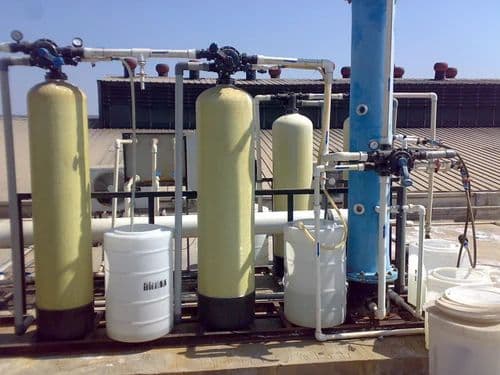
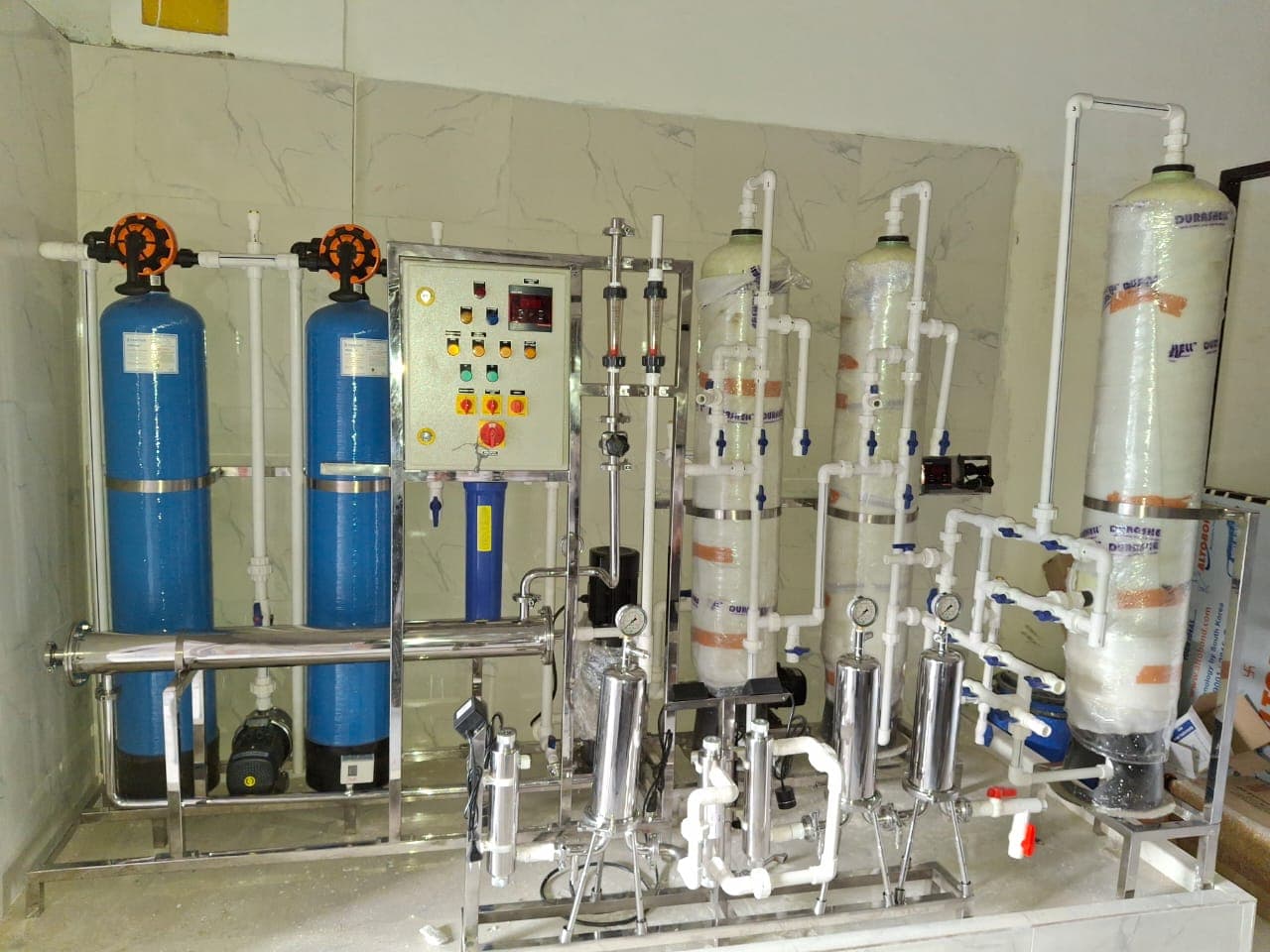
DM Plant Regeneration Process: Step by Step
How a two-bed and mixed-bed DM plant is regenerated with acid and caustic, when to regenerate, how to do it safely and what short runs or high silica mean.
By Nishu Enterprises engineering team
Published · 7 min read
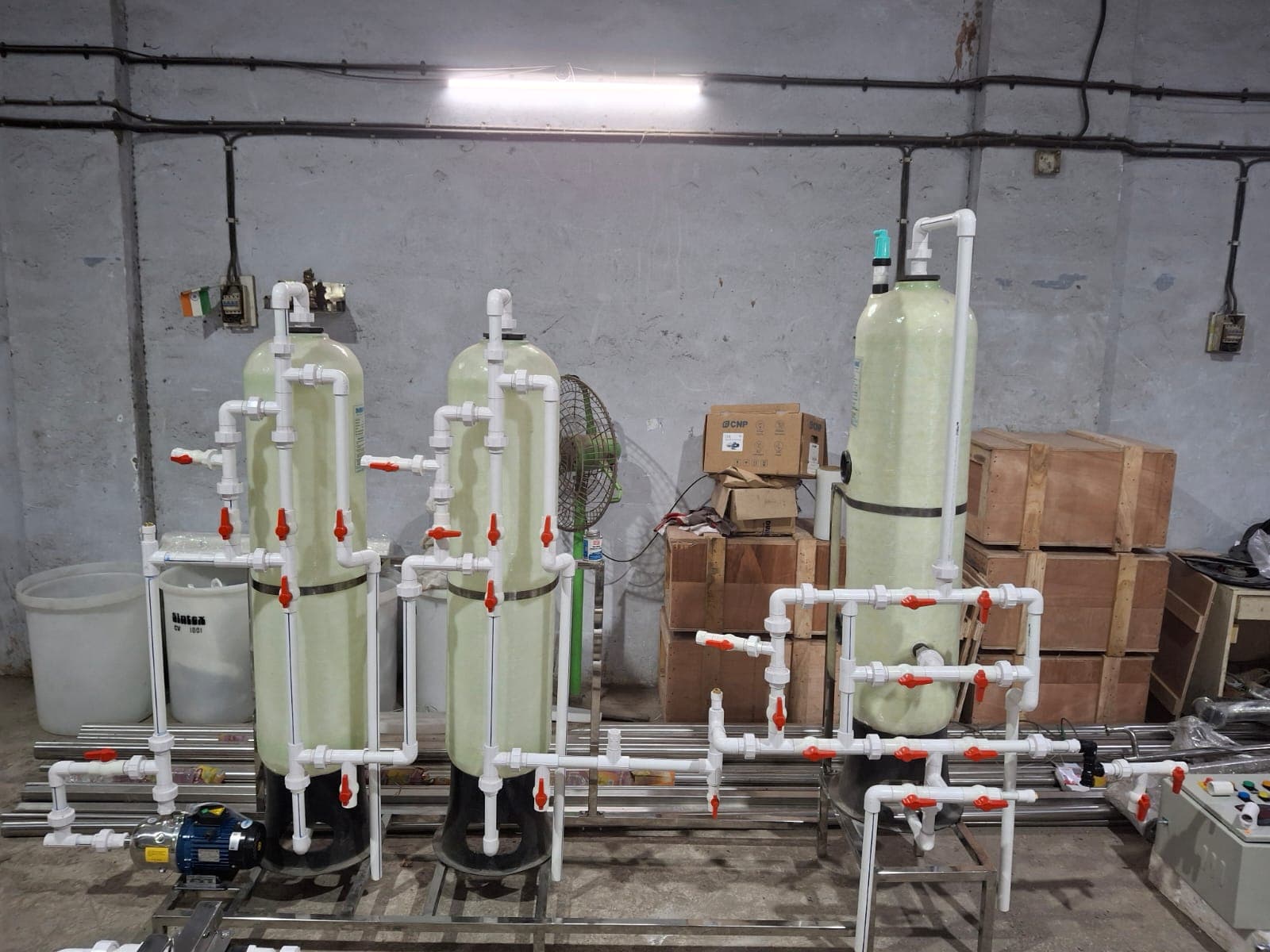
A DM (demineralisation) plant removes dissolved salts by ion exchange. Its resins do not last forever between services: they fill up with the ions they remove and have to be regenerated with acid and caustic. Regeneration done well gives long, consistent runs; done carelessly, it gives short runs, poor water and wasted chemicals.
Part of our buyer's guides. See our DM plant range →
How a two-bed DM plant works
- Cation unit: strong acid cation resin swaps calcium, magnesium, sodium and other positive ions for hydrogen ions.
- Degasser (on larger plants): strips out carbon dioxide formed after the cation unit, lightening the load on the anion resin.
- Anion unit: strong base anion resin swaps chloride, sulphate, silica and other negative ions for hydroxide ions.
- The hydrogen and hydroxide ions combine to form water, leaving treated water of low conductivity.
When to regenerate
Regenerate when the treated water conductivity rises above your set point, when silica starts to rise at the anion outlet, or when the unit has treated its designed volume since the last regeneration. A conductivity meter on the outlet, and a record of volume treated per run, tell you both.
The regeneration steps
- Backwash: water flows upward through the bed to loosen it and flush out trapped dirt and resin fines.
- Chemical injection: dilute acid (hydrochloric or sulphuric) passes through the cation resin; dilute caustic soda passes through the anion resin.
- Slow rinse: water at the same slow rate pushes the chemical through the whole bed so it all does its work.
- Fast rinse: a faster flow washes out the remaining chemical until the outlet water reaches quality.
- Return to service once conductivity is within the set point.
Chemical quantities, concentrations and flow rates are specific to each plant and resin. Follow your plant's O&M manual rather than a general guide, and change them only on the advice of the plant designer.
Mixed-bed regeneration
A mixed-bed unit holds cation and anion resin in one vessel, which gives very high purity water. To regenerate it, the resins are first separated by backwashing: the lighter anion resin rises above the heavier cation resin. Each layer is then regenerated with its own chemical, rinsed, and the two resins are remixed with air before the final rinse.
Doing it safely
- Acid and caustic cause serious burns. Wear face shields, gloves, aprons and boots when handling them.
- Keep an eyewash and safety shower near the chemical area.
- Always add concentrated chemical to water, never water to concentrated chemical.
- Collect waste regenerant in a neutralisation pit and correct its pH before discharge.
Troubleshooting
| Problem | Common causes |
|---|---|
| Runs getting shorter | Too little chemical or wrong concentration; resin fouled by iron or organics; resin loss; channelling in the bed |
| High conductivity right after regeneration | Rinse not complete; a valve leaking chemical or raw water into the outlet |
| Silica rising early | Anion resin under-regenerated; warm caustic helps silica removal on many plants |
| Resin found in the outlet | Damaged internal strainers or excessive backwash flow |
| Pressure drop rising | Dirt in the bed, fines from broken resin, or inadequate backwash |
Resin loses capacity with age. When runs stay short even after correct regeneration, send a resin sample for testing; it will show whether cleaning or replacement is the answer.
Next step
Need this specified for your site?
Send us your water analysis and daily requirement and we will size the plant before quoting.