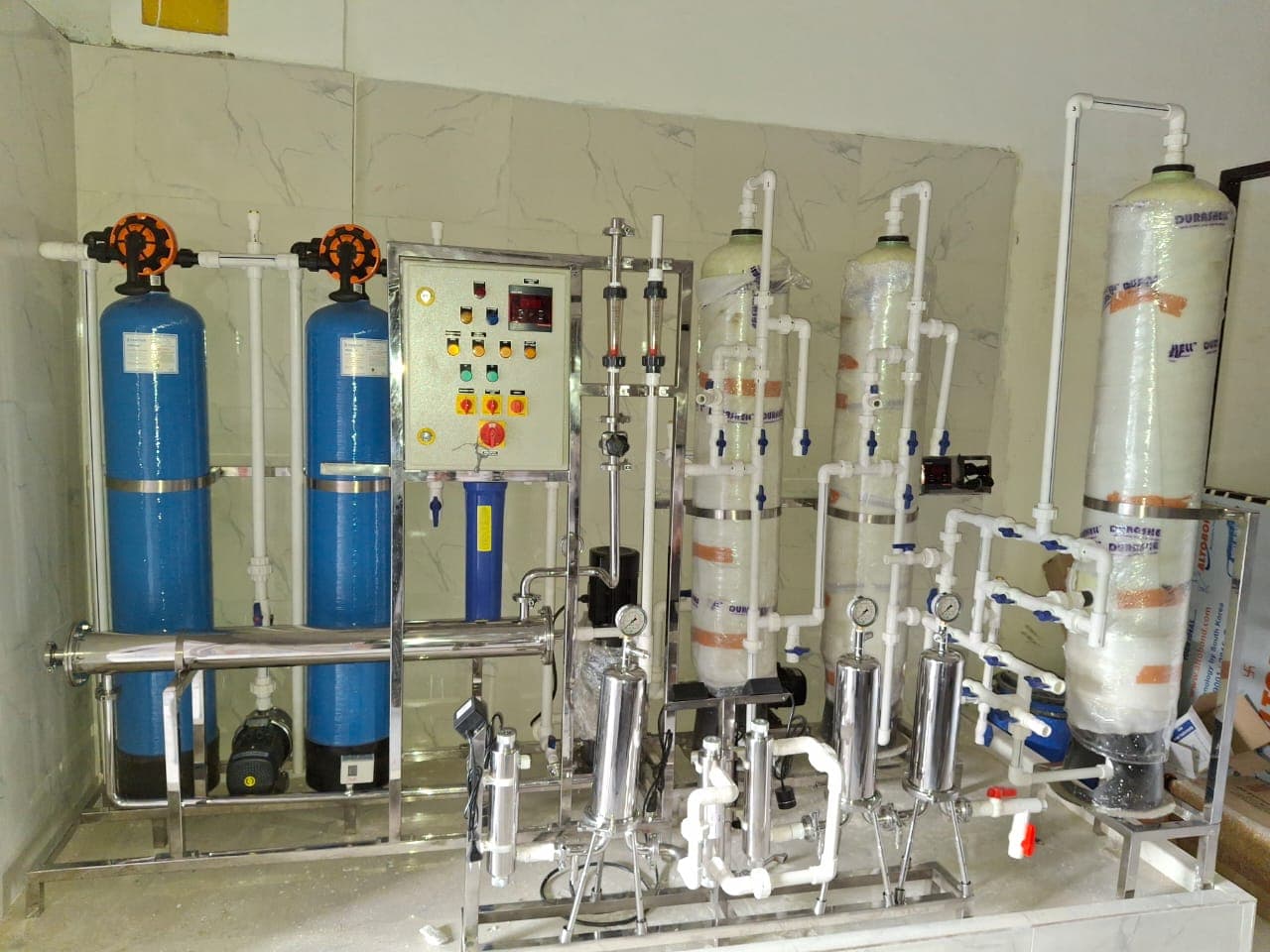
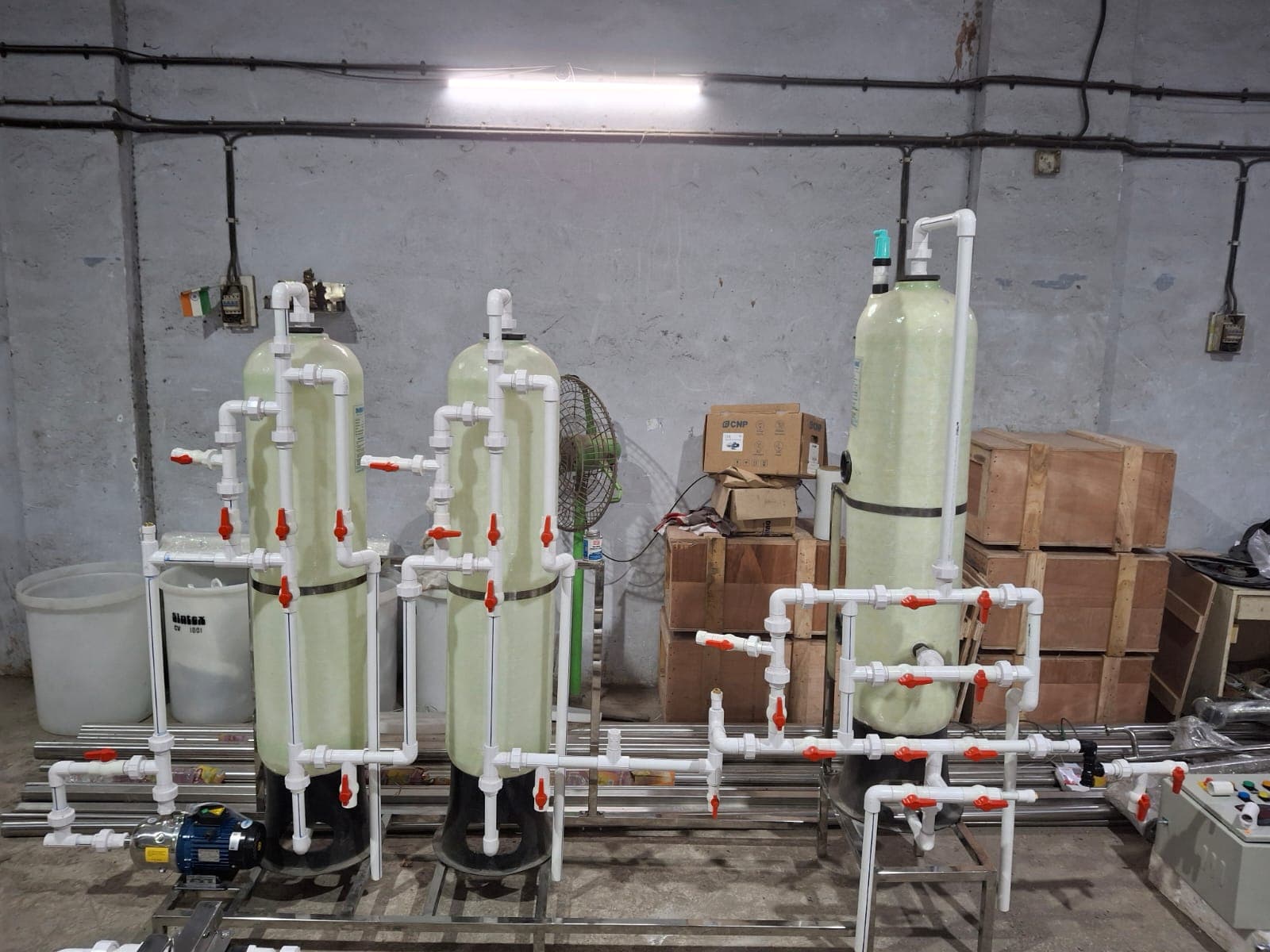
RO vs DM Plant: Which One Does Your Industry Actually Need?
Reverse osmosis and demineralisation solve different problems. A practical comparison by output purity, running cost and the industries each suits.
By Nishu Enterprises engineering team
Published · 5 min read
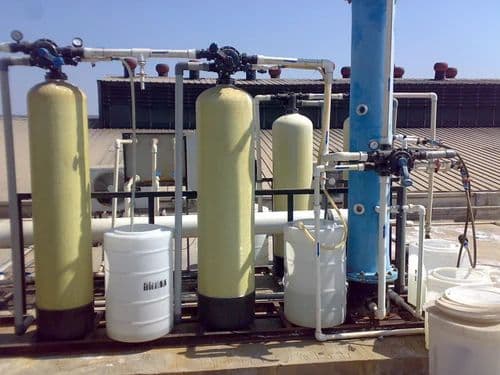
These two are regularly treated as interchangeable, and they are not. Reverse osmosis pushes water through a semi-permeable membrane under pressure, physically separating dissolved solids. Demineralisation passes water through ion exchange resin beds that swap dissolved mineral ions for hydrogen and hydroxyl ions. Different mechanisms, different outputs, different economics.
Part of our buyer's guides. Compare RO and DM plants →
The practical difference
| RO plant | DM plant | |
|---|---|---|
| Method | Membrane separation under pressure | Ion exchange resin beds |
| Typical output | Low TDS, not mineral-free | Very low conductivity, near mineral-free |
| Removes bacteria and organics | Yes, largely | No — ion exchange targets dissolved ions |
| Water wasted | Yes, as reject stream | Minimal, but resin needs regeneration |
| Ongoing consumables | Membrane replacement | Acid and alkali for regeneration |
| Best where | Feed TDS is high | Feed TDS is already low but purity must be very high |
When RO is the right answer
Choose RO when your feed water carries a heavy dissolved load — borewell supplies, brackish water, or any source above roughly 500 ppm TDS. It is also the right choice wherever the water will be consumed or used in food and beverage production, because membranes reject bacteria and organic contaminants that ion exchange does not touch.
- Packaged drinking water and beverage production
- Food processing
- General process water where the supply is brackish
- Any application where reducing high TDS is the primary problem
When DM is the right answer
Choose DM when the specification is about conductivity rather than contamination — where even trace minerals cause scaling, spotting or interference. Boiler feed water is the classic case: dissolved salts concentrate as steam is raised, and scale on a boiler tube is both an efficiency loss and a safety problem.
- Boiler feed water, particularly at higher pressures
- Pharmaceutical process water
- Laboratory and analytical use
- Electronics and component rinsing, where drying must leave no residue
Why many plants use both
For high-purity applications on poor feed water, the two work in series rather than in competition. RO removes the bulk of the dissolved load first; a smaller DM unit polishes what remains. Placing RO ahead of DM sharply reduces the ion load reaching the resin, which means longer runs between regenerations and less acid and alkali consumed.
RO first, DM second. Running DM alone on high-TDS feed means constant regeneration and chemical cost that an RO stage would have avoided.
Deciding for your own site
Two questions settle it in most cases. First, what does your process specification actually demand — a TDS figure, or a conductivity figure? A conductivity specification usually points to DM. Second, what is the feed water TDS? A high figure means RO belongs in the design regardless of what follows it.
If the answer is genuinely unclear, send a water analysis and your process specification to a manufacturer and ask them to justify the recommendation against both. A supplier who cannot explain why one suits you better than the other is guessing.
Next step
Need this specified for your site?
Send us your water analysis and daily requirement and we will size the plant before quoting.
Keep reading