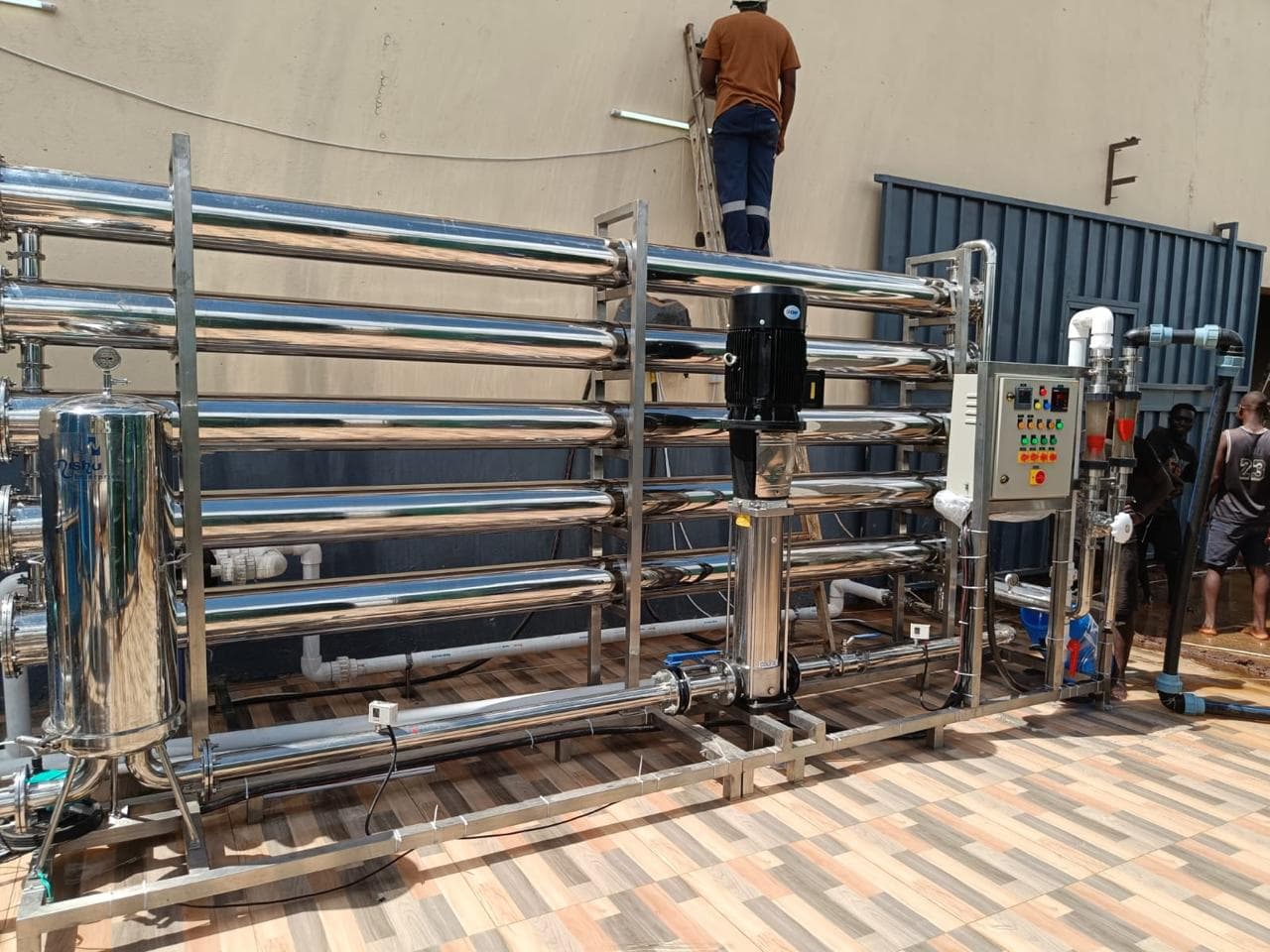
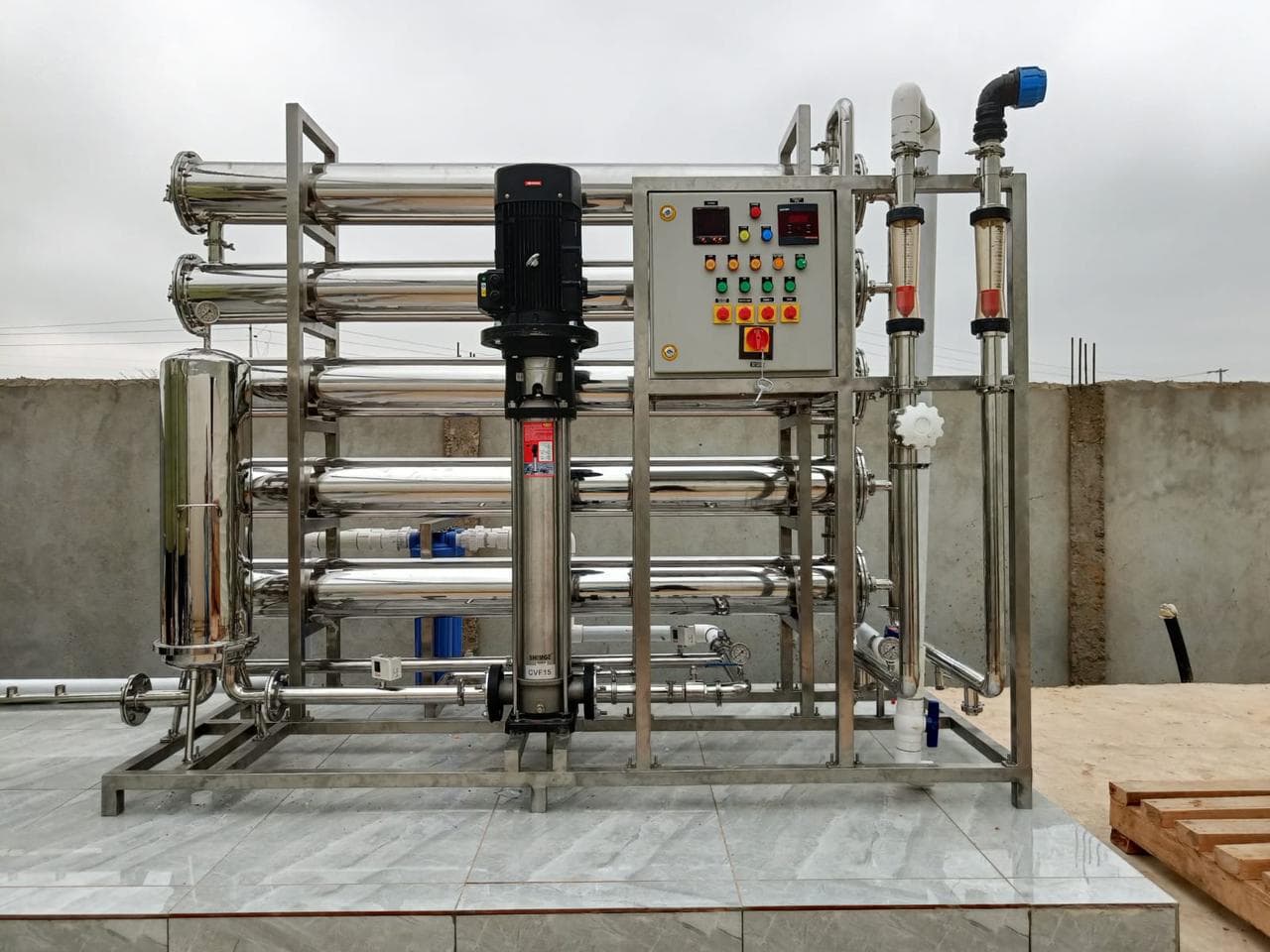
FRP vs SS RO Plant: Which Build Is Right for Your Water?
FRP or stainless steel for an RO plant's vessels, membrane housings, frame and piping: where each material makes sense, where it fails, and how to specify it.
By Nishu Enterprises engineering team
Published · 6 min read
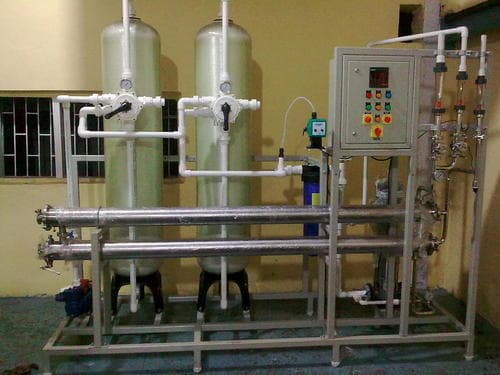
"FRP plant" and "SS plant" sound like two different machines. In practice they describe the materials of four separate parts: the pre-treatment vessels, the membrane housings, the frame and the piping. A good RO plant often mixes materials, choosing each one for the job it does. Knowing which part is which lets you compare quotes properly and avoid paying for steel where it adds nothing.
Part of our buyer's guides. See our RO plant range →
The four parts that can be FRP or steel
| Part | Options | What decides it |
|---|---|---|
| Pre-treatment vessels (sand, carbon, softener) | FRP, MS with rubber lining or epoxy coating, stainless steel | Size, hygiene requirement and budget |
| Membrane housings | FRP or stainless steel (SS304 or SS316) | Operating pressure, chloride content of the water, hygiene and appearance |
| Skid frame | MS with epoxy or powder coating, or stainless steel | Plant room environment and hygiene requirement |
| Piping | UPVC or CPVC on the low-pressure side; stainless steel on the high-pressure side | Pressure, above all |
FRP: where it is the right choice
FRP (fibre-reinforced plastic) does not corrode. That makes it the natural choice for water that attacks steel: high-chloride borewell water, brackish water and seawater. FRP pressure vessels are made for specific pressure ratings, and seawater RO plants almost always use FRP membrane housings rated for high pressure, because ordinary stainless steel pits in seawater.
- Corrosion-free on salty and high-chloride water.
- Lighter than steel, and usually cheaper for the same size.
- Standard for pre-treatment filters and softener vessels in small and medium plants.
- Must be used within its rated pressure and protected from direct sunlight and impact.
Stainless steel: where it earns its cost
Stainless steel costs more, but it is the expected material wherever hygiene, cleanability and appearance matter: packaged drinking water, food and beverage, dairy and pharmaceutical plants. It also tolerates knocks and heat better than FRP. SS316 resists chlorides better than SS304, but neither is suitable for membrane housings on seawater.
- Easy to clean and sanitise, and inspectors expect it in food and bottling plants.
- Robust against impact, vibration and hot cleaning solutions.
- SS304 for most fresh water duties; SS316 where chlorides are higher.
- Not for membrane housings on seawater, where FRP or special alloys are used.
Whatever the vessels are made of, the high-pressure piping between the pump and the membranes should be stainless steel. UPVC on the high-pressure side of an RO plant is a red flag.
Choosing by application
| Application | Usual build |
|---|---|
| Packaged drinking water and bottling | SS membrane housings, SS frame, SS storage; FRP or SS pre-treatment vessels |
| Food, beverage and dairy process water | Stainless steel for everything in contact with treated water |
| Pharmaceutical purified water | SS316L for treated water contact parts, with sanitary fittings |
| Boiler feed and industrial process water | FRP pre-treatment vessels and membrane housings on a coated MS or SS frame |
| Brackish or high-chloride borewell water | FRP housings and vessels; SS316 or better on high-pressure piping |
| Seawater desalination | High-pressure FRP membrane housings; high-grade alloy on the high-pressure side |
| Humid coastal or chemical plant rooms | FRP or stainless steel; avoid painted MS frames that will rust |
What to write into the specification
- Material of each part: pre-treatment vessels, membrane housings, frame, low-pressure and high-pressure piping.
- Stainless grade (SS304 or SS316) wherever steel is quoted.
- Pressure rating of the membrane housings and of the high-pressure piping.
- Coating system for any MS parts, and whether vessels are rubber-lined.
- The make of the FRP vessels and housings.
With those five lines in every quotation, an "FRP plant" and an "SS plant" can be compared part by part. Often the best answer is FRP where the water is aggressive and steel where hygiene or pressure demands it.
Next step
Need this specified for your site?
Send us your water analysis and daily requirement and we will size the plant before quoting.