How to Read a Water Test Report Before You Buy a Treatment Plant
What each line of a water test report means for choosing a treatment plant: TDS, hardness, iron, silica, chloride, pH and bacteria, with Indian drinking water limits.
By Nishu Enterprises engineering team
Published · 7 min read
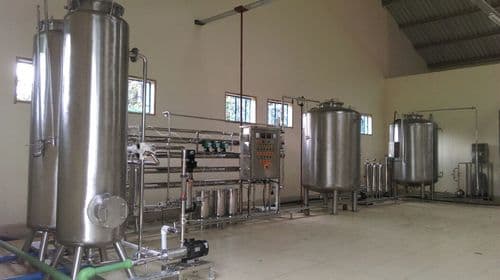
A water test report decides which treatment plant you need. The same report that looks like a page of chemistry answers three practical questions: is there too much dissolved salt, is the water hard, and is there anything that will foul or damage the equipment? This guide explains each common line.
Part of our buyer's guides. Send us your water report for a recommendation →
Units first
- mg/L and ppm (parts per million) mean the same thing for water.
- Hardness and alkalinity are usually reported "as CaCO3", so different minerals can be added together.
- Conductivity is in µS/cm. TDS is roughly 0.55 to 0.7 times the conductivity, depending on which salts are present.
- NTU is the unit for turbidity (cloudiness).
The lines that decide the plant
| Parameter | What a high value means | Usual treatment |
|---|---|---|
| TDS (total dissolved solids) | Salty or brackish taste; high blowdown in boilers | RO; DM for very pure water |
| Total hardness | Scale on pipes, fittings, geysers and boilers | Softener, or RO where TDS is also high |
| Iron and manganese | Brown staining; fouls softener resin and RO membranes | Oxidation and filtration before other treatment |
| Silica | Hard scale in boilers and on RO membranes; carried over to turbines | RO with antiscalant; DM with strong base anion resin |
| Chloride | Salty taste; corrodes steel, especially stainless | RO; choose FRP or suitable steel grade |
| Turbidity | Cloudy water; clogs filters and membranes | Sand filtration, sometimes with coagulation |
| pH | Low pH is corrosive; high pH favours scale | Dosing to correct pH |
| Coliform or E. coli | Unsafe to drink | Chlorination, UV or ozone, plus finding the source |
Drinking water: Indian limits
For drinking water, compare the report with IS 10500, the Indian Standard for drinking water. It gives an acceptable limit and, for some parameters, a higher permissible limit that applies only when no better source is available. A few key values:
| Parameter | Acceptable limit | Permissible limit (no alternate source) |
|---|---|---|
| TDS | 500 mg/L | 2,000 mg/L |
| Total hardness (as CaCO3) | 200 mg/L | 600 mg/L |
| Chloride | 250 mg/L | 1,000 mg/L |
| Sulphate | 200 mg/L | 400 mg/L |
| Fluoride | 1.0 mg/L | 1.5 mg/L |
| Nitrate | 45 mg/L | No relaxation |
| pH | 6.5 to 8.5 | No relaxation |
| Turbidity | 1 NTU | 5 NTU |
| Coliform bacteria | Must not be detectable in a 100 ml sample | No relaxation |
Check the current edition of IS 10500 for the full list. Packaged drinking water and industrial uses such as boiler feed or pharmaceutical water have their own, stricter specifications.
Taking a sample that means something
- Use a clean bottle from the laboratory; bacteriological tests need a sterile bottle.
- Run the tap or pump for a few minutes before filling, so the sample is fresh source water.
- Fill to the top, cap tightly and label with the source, date and time.
- Deliver it to a NABL-accredited laboratory within the time the lab specifies.
- Where the source changes through the year, test again in a different season.
One analysis is a snapshot. Borewell and tanker water can change a lot between the monsoon and summer, so a plant sized on a single test may be undersized for the worst month.
Send us your report with how much water you need and what it is for. We will tell you which lines matter for your plant and what treatment they call for.
Next step
Need this specified for your site?
Send us your water analysis and daily requirement and we will size the plant before quoting.