Mineral Water Plant Machinery List: Every Machine, Stage by Stage
The complete machinery list for a packaged drinking water plant, from raw water tank to packed cartons, with what each machine does and what decides its size.
By Nishu Enterprises engineering team
Published · 7 min read
A packaged drinking water plant is a chain of machines, and a quotation that leaves one out is not cheaper, just incomplete. This list follows the water from the raw water tank to the packed carton, so you can check every quotation against it.
Part of our buyer's guides. Explore turnkey mineral water projects →
Stage 1: raw water treatment
| Machine | What it does | What decides its size |
|---|---|---|
| Raw water storage tank and pump | Holds and feeds source water to the plant | Daily output and how reliable the source is |
| Chlorine dosing system | Disinfects raw water and controls bacterial growth ahead of the filters | Flow rate |
| Pressure sand filter | Removes suspended solids and turbidity | Flow rate and feed turbidity |
| Activated carbon filter | Removes chlorine, odour and organics that would damage RO membranes | Flow rate |
| Water softener (if needed) | Removes hardness on very hard water | Feed hardness and flow |
| Antiscalant dosing | Prevents scale on the RO membranes | Flow rate |
| Micron cartridge filter | Final protection for the RO membranes | Flow rate |
Stage 2: purification
| Machine | What it does | What decides its size |
|---|---|---|
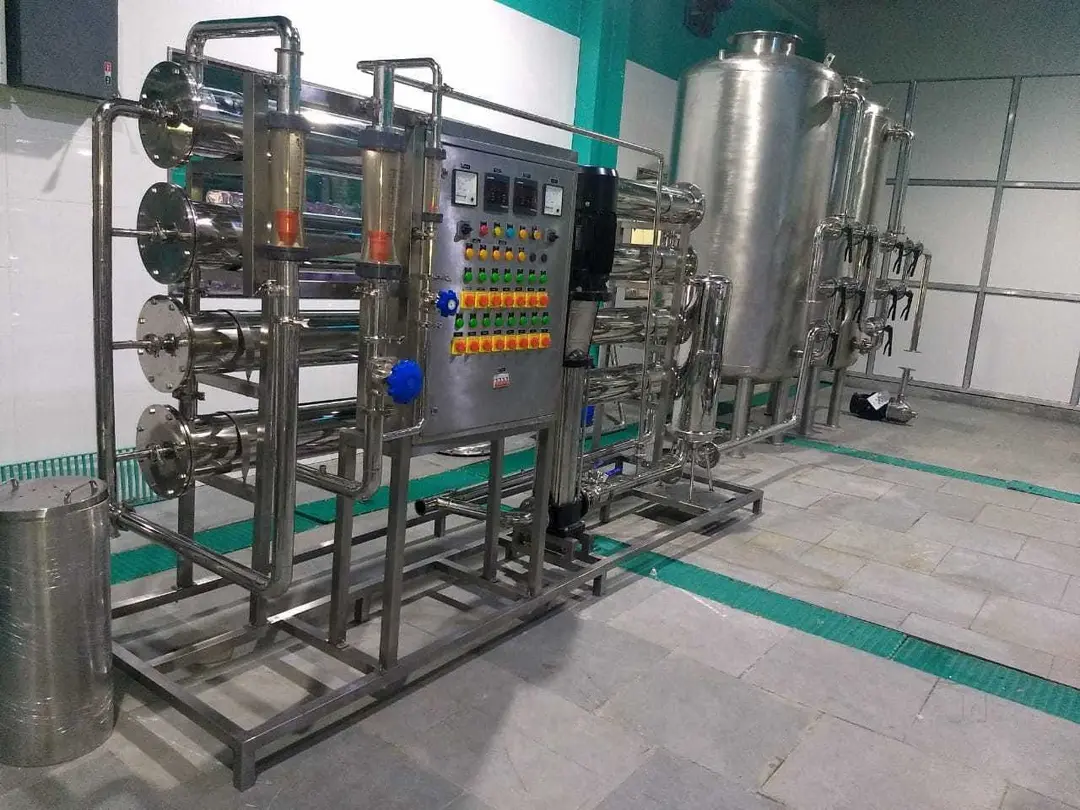
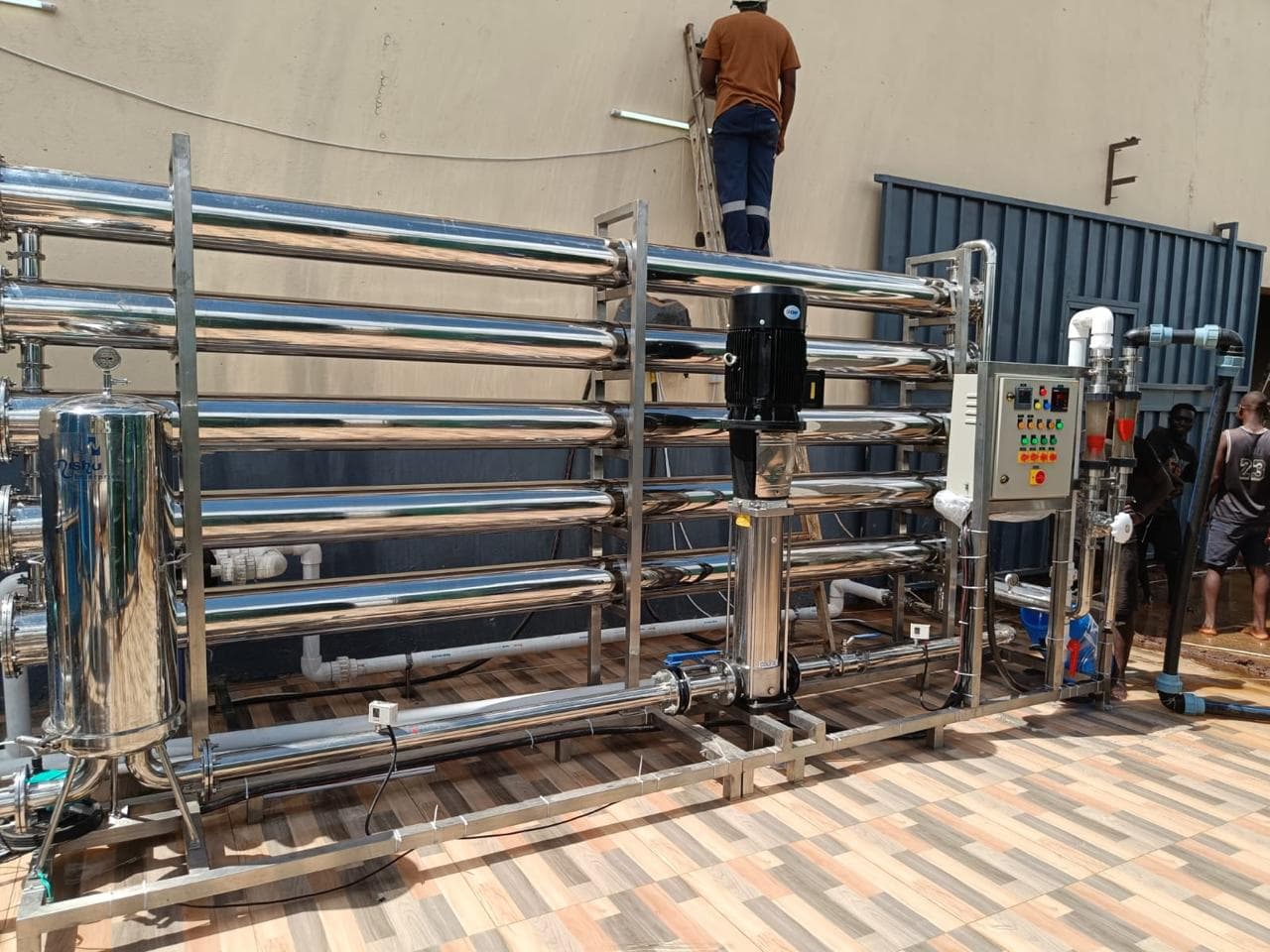
| RO plant | Reduces dissolved solids to the level needed | Output in litres per hour and feed TDS |
| Mineral dosing system | Adds back a controlled mineral profile for taste and to meet product standards | Output flow |
| UV steriliser | Disinfects treated water | Output flow |
| Ozone generator with contact tank | Disinfects water and leaves a small residual that protects it in the bottle | Output flow and the dose needed |
| SS treated water storage tanks | Buffer between treatment and filling | Filling speed and shift pattern |
| Polishing micron filters | Final filtration before the filler | Filling flow |
Ozone dose needs care: enough to leave a small residual at filling, no more. On water containing bromide, too much ozone forms bromate, which has a regulatory limit.
Stage 3: bottling and packing
| Machine | What it does | What decides its size |
|---|---|---|
| Bottle blowing machine (for PET bottles) | Blows bottles from PET preforms on site | Bottles per hour; some plants buy ready bottles instead |
| Rinsing, filling and capping (RFC) machine | Rinses, fills and caps bottles in one machine | Bottles per minute and bottle sizes |
| 20-litre jar washing, filling and capping machine | Handles returnable jars | Jars per hour |
| Inspection station | Checks fill level and foreign particles | Line speed |
| Labelling or shrink-sleeve machine | Applies the product label | Line speed and label type |
| Batch coding printer | Prints batch number and dates | Line speed |
| Shrink wrapping or carton packing | Packs bottles for dispatch | Line speed and pack format |
Supporting equipment people forget
- Air compressor for the bottling machines.
- In-house laboratory equipment for routine testing.
- Power backup sized for the whole line, not just lighting.
- Chiller if the blowing machine needs one.
- Conveyors between machines.
- Cleaning and sanitising system for tanks and pipework.
Match the machines to each other
The most common mistake is a mismatched line: an RO plant that cannot keep up with the filler, or an ozone generator sized for a smaller plant. Size the chain from your planned daily output and shift pattern. The RO output, storage, ozonation and filling speed all have to agree.
We build the water treatment plant, ozonation and filling line as one scope, so the stages are sized together. Tell us your target output, pack sizes and source water, and we will set out which machines your plant needs.
Next step
Need this specified for your site?
Send us your water analysis and daily requirement and we will size the plant before quoting.