Process Water Treatment for Manufacturing Plants
Manufacturing is the sector where "water treatment" means the widest range of things. A textile dyehouse, an engineering shop with a cooling tower and a chemical plant with a process requirement all need different water, and the only way to get the design right is to start from what the process actually demands rather than from a standard plant. We have built into all of these since 1996.
- Established
- 1996Established in Vasai, Mumbai
- Countries
- Plants running inNigeria · Ghana · Tanzania · Nepal & many more
- Clients
- Trusted byBisleri · Bailey · Campa · McDowell's · Mantra · Meru Spring
The challenge
What makes this sector different
Every process wants different water
Cooling, rinsing, dyeing and process make-up have different requirements. A single treatment standard for the whole plant either over-treats or fails somewhere.
Scale in cooling systems
Hardness concentrates as cooling water evaporates. Scale on a heat exchanger costs efficiency continuously and ends in unplanned downtime.
Rinse water quality shows on the product
In plating, dyeing and precision cleaning, dissolved solids left behind by rinse water become visible defects on the finished part.
Feed water varies through the year
Borewell quality shifts seasonally. A plant designed on a single analysis drifts out of specification when the water changes.
Start from the process, not the plant
The productive first question is not "what size RO do I need" but "which streams in this plant actually need treated water, and to what standard". Most manufacturing sites have three or four distinct water duties, and treating all of them to the tightest standard is how plants end up with running costs they did not expect.
| Duty | Usual requirement | Typical route |
|---|---|---|
| Cooling tower make-up | Hardness and scaling control | Softening, or softening with dosing |
| Boiler feed | Dissolved solids and silica removal | DM, or RO followed by polishing |
| Process make-up | Process-specific, often low TDS | RO sized on the process specification |
| Final rinse | Very low dissolved solids | RO with DM or mixed-bed polishing |
| Potable / canteen | Drinking water standards | RO with disinfection |
Segregating duties is usually cheaper than treating everything to the highest standard. It also means a fault in one stream does not stop the whole plant.
Cooling water and the cycles of concentration
A cooling tower works by evaporating water, which leaves behind everything that was dissolved in it. Dissolved solids therefore concentrate continuously, and the ratio between the concentration in the tower and in the make-up is what determines how hard the water in the system becomes. Softening the make-up allows more cycles before scaling begins, which reduces both blowdown and make-up consumption.
The calculation is worth doing properly, because the saving runs in both directions: less make-up water drawn, and less treated water thrown away as blowdown. On a site drawing from a borewell with a seasonal limit, that can be the difference between running through summer and not.
Rinse water in surface finishing and textiles
In plating, anodising, dyeing and precision cleaning, the final rinse is where water quality becomes a visible product attribute. Dissolved solids in the rinse water stay on the part when the water evaporates — as spotting on a plated surface, or as shade variation across a dyed batch. RO is normally the right answer, with DM or mixed-bed polishing where the tolerance is tight.
Textile processing adds a second requirement: hardness reacts with dyes and with process chemistry, so softening is often needed on the process stream as well as on the boiler feed. The two duties have different flow profiles and are usually better served by separate units than by one oversized plant.
Fabrication as part of the scope
Manufacturing installations rarely fit a catalogue layout — the plant has to go where there is room. We fabricate SS and MS vessels, storage tanks and pressure vessels in-house, which means the treatment train can be built around the space available rather than the space being rebuilt around the train. It also keeps material certification with the same supplier who commissions the plant.
What to send with an enquiry
A feed water analysis, a list of the water duties in the plant with approximate flow for each, and the specification for whichever duty is tightest. If you have a seasonal problem — a borewell that changes through the year, or a supply that is restricted in summer — tell us at enquiry stage, because it changes both the sizing and the storage arrangement.
Equipment
Systems we supply for this sector
The equipment below covers most requirements in manufacturing. Where the duty is unusual, we design against the specification instead.
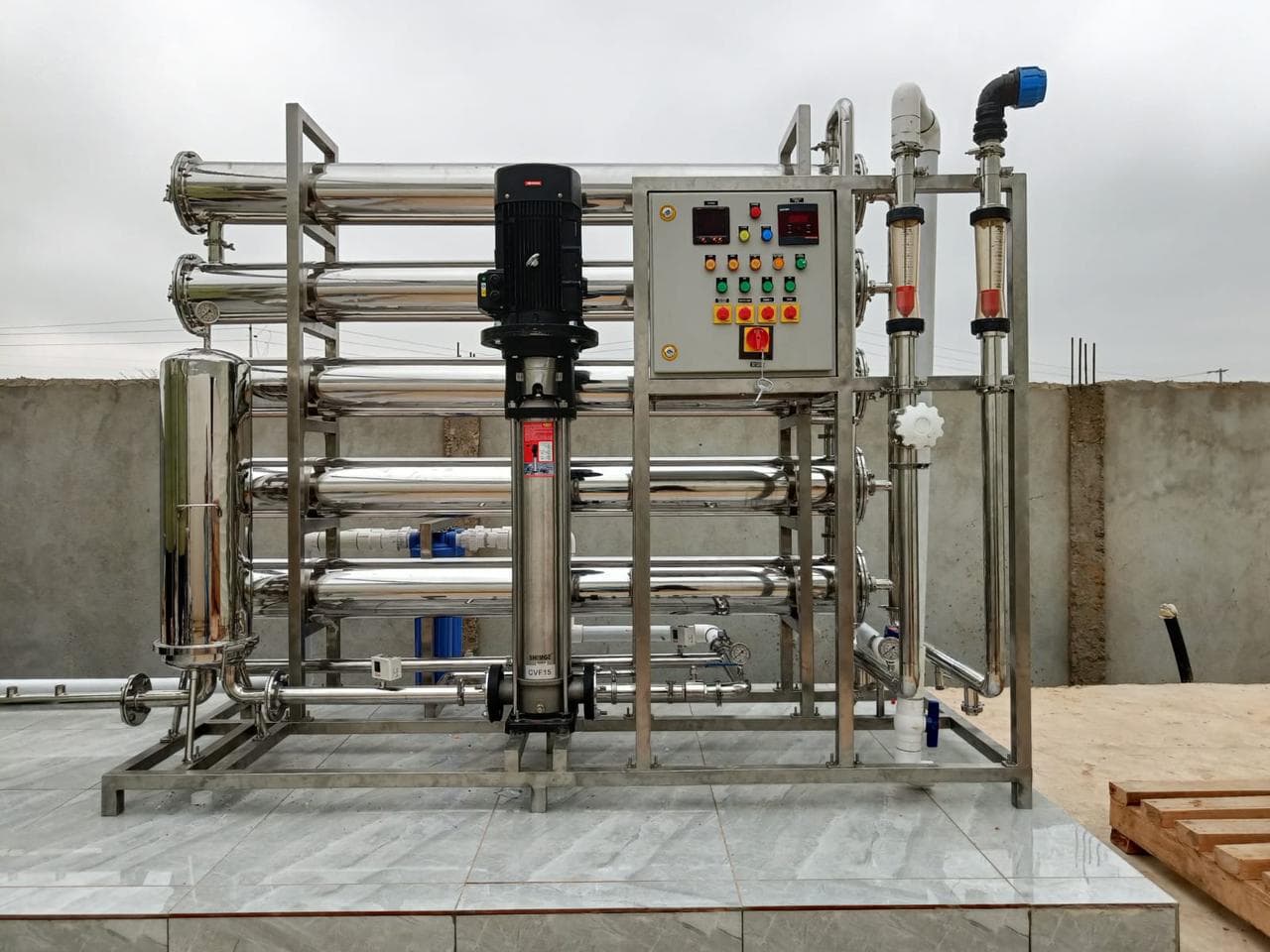
Reverse Osmosis Plant (RO)
Industrial and commercial RO plants up to 10,000+ LPH for factories, hotels, hospitals and housing societies. Built in Vasai, Mumbai since 1996.View specifications →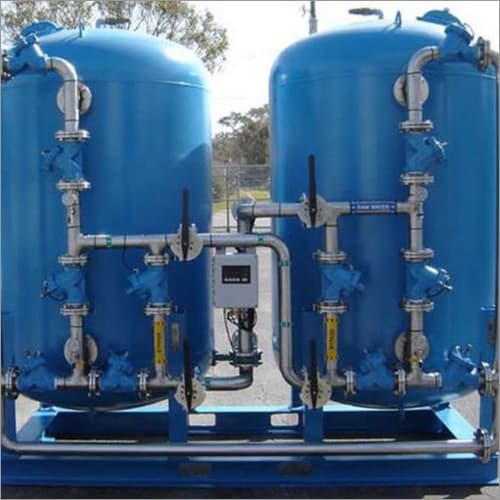
Water Softening Plant
Automatic water softening plants for boilers, cooling towers, hotels and housing societies. Removes hardness from borewell water. Made in Vasai since 1996.View specifications →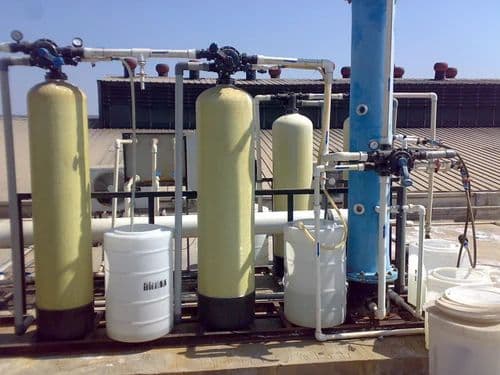
Demineralized Plant (DM)
Two-bed and mixed-bed DM water plants for boiler feed, pharmaceutical and process water. Manufactured in Vasai, Mumbai since 1996, with plants in Nigeria, Ghana, Tanzania, Nepal and many more.View specifications →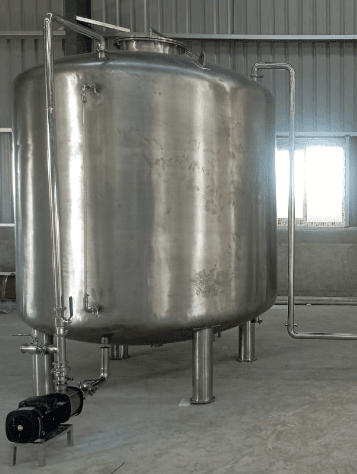
Fabricated SS & MS Vessels / Tanks
Custom stainless-steel and mild-steel storage tanks, pressure vessels and filter vessels, fabricated in-house in Vasai, Maharashtra since 1996.View specifications →FAQ
Frequently asked questions
Can't find your answer? Call or WhatsApp us and we'll answer it.
Should I treat all the water in my plant to the same standard?
Usually not. Cooling make-up, boiler feed, process make-up and final rinse have different requirements, and treating everything to the tightest standard raises running cost unnecessarily. Segregating duties is normally both cheaper and more robust.
Does softening the cooling tower make-up actually save money?
Yes, in two ways: it allows more cycles of concentration before scaling starts, which reduces blowdown, and it reduces make-up water drawn. On sites with a restricted borewell, that saving can be what keeps the plant running through summer.
What treatment do I need for final rinse water?
RO is the usual baseline, because dissolved solids left by the rinse stay on the part as spotting or shade variation. Where the tolerance is tight, DM or mixed-bed polishing follows the RO.
Can you build a plant to fit a constrained site layout?
Yes. We fabricate vessels and tanks in-house, so the treatment train can be designed around the space available rather than to a standard footprint.
Do you handle plants where feed water quality changes seasonally?
Yes, and it is worth flagging at enquiry stage. Seasonal variation affects sizing, storage and in some cases the choice of treatment route, so we design against the range rather than a single analysis.
Keep exploring
Other industries we serve
Get a quotation
Send us your water analysis. We'll size the plant.
Tell us the source, the daily demand and what the water is for. We reply with a recommended treatment train and a quotation.