Purified Water Systems for the Pharmaceutical Industry
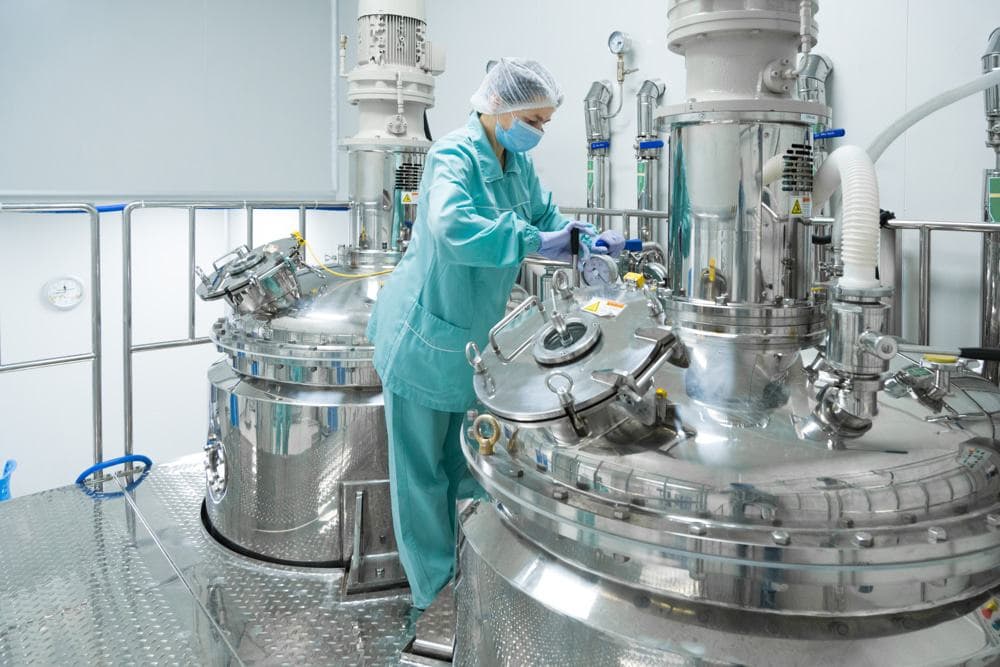
Pharmaceutical water is not a utility — it is an ingredient, and it is audited like one. A purified water system has to hold its specification continuously, prove it through validation, and keep proving it through every inspection that follows. We have built and commissioned water systems for pharmaceutical and formulation plants since 1996, designed around the specification the plant has to defend rather than the cheapest route to clear water.
- Established
- 1996Established in Vasai, Mumbai
- Countries
- Plants running inNigeria · Ghana · Tanzania · Nepal & many more
- Clients
- Trusted byBisleri · Bailey · Campa · McDowell's · Mantra · Meru Spring
The challenge
What makes this sector different
Specification is non-negotiable
Purified water has to meet conductivity and TOC limits continuously, not on average. A system that drifts out of spec between samples is a deviation you will have to explain.
Microbial control in the loop
Most pharmaceutical water failures are not treatment failures — they are distribution failures. Stagnant water in a badly designed loop grows biofilm regardless of how good the plant upstream is.
Validation and documentation
DQ/IQ/OQ/PQ documentation, material certificates and weld records are part of the deliverable. A plant supplied without them cannot be qualified.
Sanitisation without downtime
The system has to be sanitisable on a routine schedule that fits around production, not one that stops it.
What the specification actually demands
Purified water for pharmaceutical use is defined by limits rather than by a treatment process — which means any train that holds the limits is acceptable, and any train that does not is worthless however expensive it was. The two numbers that govern the design are conductivity and total organic carbon. Pharmacopoeial purified water is commonly specified at a conductivity below 1.3 µS/cm at 25 °C and TOC below 500 ppb, with microbial limits controlled separately through the distribution loop.
Those limits drive a multi-stage train. In practice this means pre-treatment to protect the membranes, reverse osmosis to remove the bulk of dissolved solids, and a polishing stage — mixed-bed demineralisation or electrodeionisation — to take the final conductivity down and hold it there. Water for injection sits above this as a separate grade with its own distillation or membrane route.
The plant is the easy half. If the distribution loop is wrong, the specification fails at the point of use no matter what the plant produces.
A typical train for a formulation plant
- Raw water storage and multigrade filtration to remove suspended solids and turbidity.
- Activated carbon filtration for chlorine and organics — chlorine has to be removed before it reaches the RO membranes.
- Water softening or antiscalant dosing to protect the membranes from hardness scaling on the reject side.
- Micron cartridge filtration as final membrane protection.
- Reverse osmosis — single or two-pass depending on feed TDS and the conductivity the polishing stage has to start from.
- Mixed-bed demineralisation or EDI for final polishing to pharmacopoeial conductivity.
- UV sterilisation and a recirculating distribution loop holding minimum velocity at all times.
Why the distribution loop decides the outcome
Purified water is aggressive and nearly sterile when it leaves the polishing stage, which makes it an excellent growth medium the moment it stops moving. This is why pharmaceutical loops are designed to recirculate continuously rather than sit in a tank, why dead legs are kept short — commonly specified under six pipe diameters — and why every branch is taken off the main loop rather than run as a spur.
Material choice follows the same logic. Loops are built in 316L stainless steel with orbital-welded joints and internally polished surfaces, because a rough weld bead is where biofilm establishes first. We fabricate the vessels and loop components in-house, which keeps the material certificates and weld documentation under one supplier rather than three.
Sanitisation strategy
| Method | Typical use | Consideration |
|---|---|---|
| Hot water sanitisation | Routine, scheduled | Requires loop and components rated for the temperature; no chemical residue to flush |
| Ozonation | Continuous or periodic | Effective and residue-free after UV destruction; needs ozone-compatible materials |
| UV sterilisation | Continuous, in-loop | Controls counts in circulation; not a substitute for periodic sanitisation |
| Chemical sanitisation | Periodic, on older loops | Effective but needs a validated flush-out and downtime |
What we need to quote accurately
Pharmaceutical enquiries are the ones where a vague brief costs the most, because the difference between a single-pass and a two-pass RO with EDI polishing is substantial in both capital and running cost. Send us the feed water analysis, the grade you have to produce, peak and average demand in litres per hour, the number of user points and their locations, and the sanitisation approach your quality team expects. We will come back with a train sized to the specification rather than a generic capacity.
Equipment
Systems we supply for this sector
The equipment below covers most requirements in pharmaceutical. Where the duty is unusual, we design against the specification instead.
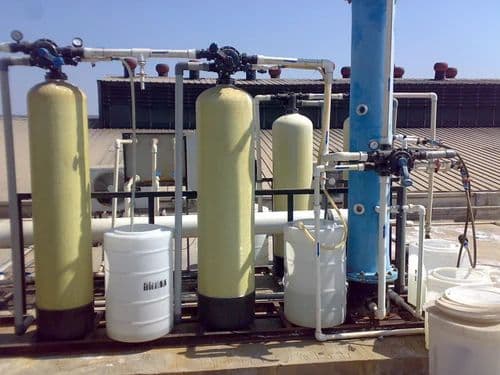
Demineralized Plant (DM)
Two-bed and mixed-bed DM water plants for boiler feed, pharmaceutical and process water. Manufactured in Vasai, Mumbai since 1996, with plants in Nigeria, Ghana, Tanzania, Nepal and many more.View specifications →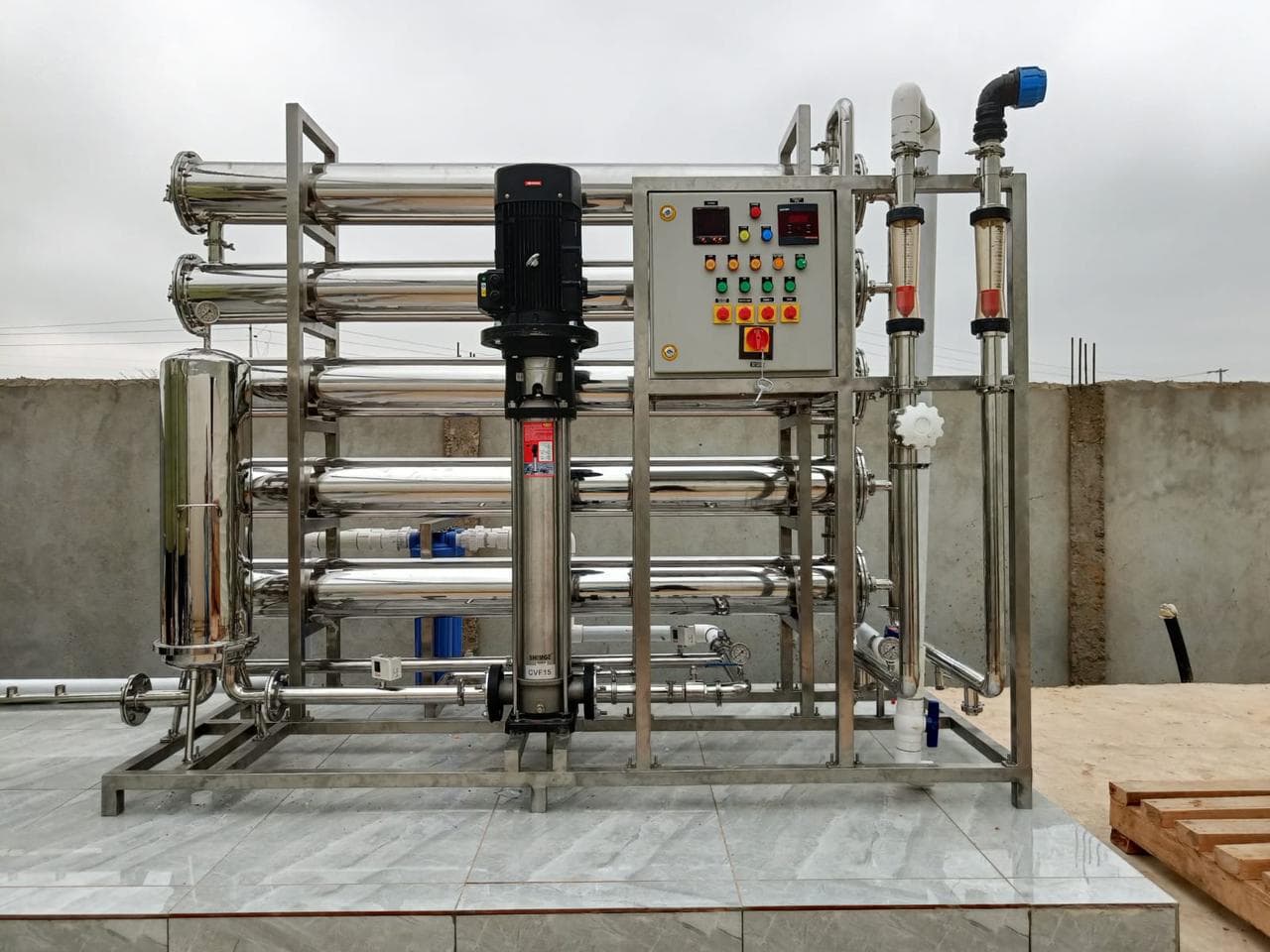
Reverse Osmosis Plant (RO)
Industrial and commercial RO plants up to 10,000+ LPH for factories, hotels, hospitals and housing societies. Built in Vasai, Mumbai since 1996.View specifications →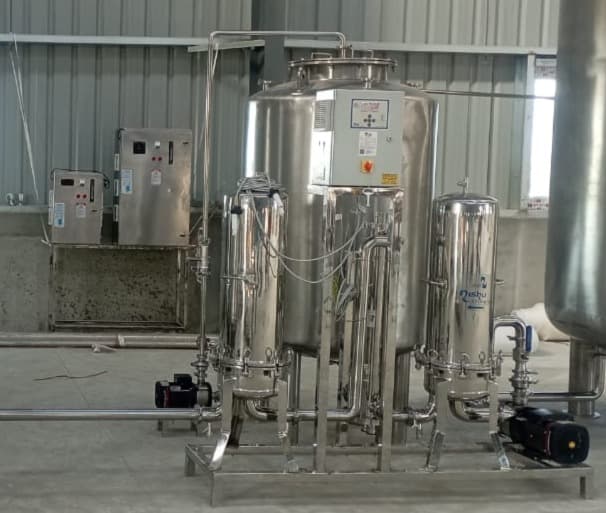
Dosing, Ozonation & UV Systems
Ozone generators for water tanks and bottling plants, UV sterilisers and chemical dosing systems for water disinfection. Manufacturer in Mumbai since 1996.View specifications →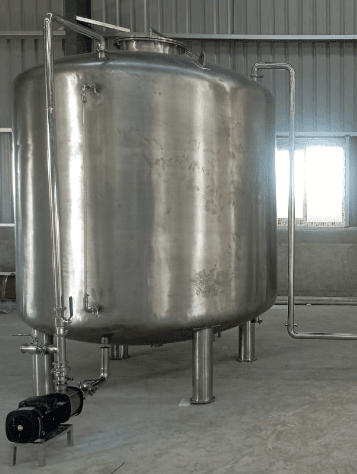
Fabricated SS & MS Vessels / Tanks
Custom stainless-steel and mild-steel storage tanks, pressure vessels and filter vessels, fabricated in-house in Vasai, Maharashtra since 1996.View specifications →FAQ
Frequently asked questions
Can't find your answer? Call or WhatsApp us and we'll answer it.
Do you supply purified water systems that meet IP and USP requirements?
Yes. We design the treatment train around the pharmacopoeial limits your plant has to hold — typically conductivity below 1.3 µS/cm at 25 °C and TOC below 500 ppb for purified water — using RO followed by mixed-bed DM or EDI polishing, with a recirculating distribution loop.
Do you provide validation documentation?
Yes. We supply design, installation, operational and performance qualification documentation along with material test certificates for the stainless steel and weld records for fabricated components, so the system can be qualified without gaps.
What is the difference between a DM plant and a purified water system?
A DM plant removes dissolved ions and will give you low conductivity water. A pharmaceutical purified water system adds the pre-treatment, polishing, microbial control and validated recirculating distribution needed to hold that quality continuously at the point of use.
Can you upgrade an existing system rather than replace it?
Often, yes. If the existing pre-treatment and RO are sound, adding a polishing stage or rebuilding the distribution loop is frequently enough. We survey the installation first rather than quoting a replacement by default.
How long does installation and commissioning take?
Typically 4-8 weeks depending on system complexity and site readiness, with qualification activities running alongside commissioning.
Keep exploring
Other industries we serve
Get a quotation
Send us your water analysis. We'll size the plant.
Tell us the source, the daily demand and what the water is for. We reply with a recommended treatment train and a quotation.