Water Treatment for Construction Sites and Infrastructure Projects
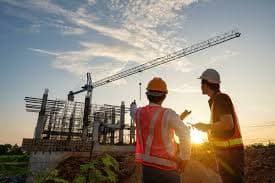
Construction water gets less attention than it deserves, on two fronts. Water used for mixing and curing concrete directly affects the strength the structure achieves, and it is governed by standards for good reason. Site drinking water is a welfare obligation on projects that often have no municipal supply at all. Both problems have to be solved with equipment that can be installed quickly and moved to the next project afterwards.
- Established
- 1996Established in Vasai, Mumbai
- Countries
- Plants running inNigeria · Ghana · Tanzania · Nepal & many more
- Clients
- Trusted byBisleri · Bailey · Campa · McDowell's · Mantra · Meru Spring
The challenge
What makes this sector different
Mixing and curing water affects strength
Chlorides, sulphates and organic contamination in mixing water affect setting behaviour and long-term durability, and chlorides drive reinforcement corrosion.
No municipal supply on site
Most sites run on borewell or tanker water of unknown and variable quality, which is not a sound basis for either concrete or drinking water.
Drinking water for the workforce
Labour camps and site offices need potable water continuously, and the supply often has to be created rather than connected.
The plant has to move
A project ends. Equipment bought for one site should be relocatable to the next rather than written off with the project.
Water for concrete: why the analysis matters
Indian practice for plain and reinforced concrete sets limits on the water used for mixing and curing, covering chlorides, sulphates, suspended solids, organic matter and pH. The reasoning is direct: chlorides promote corrosion of the reinforcement, sulphates attack the set cement, organic matter interferes with setting, and suspended solids weaken the paste. Borewell and tanker water routinely exceed these limits without anyone on site knowing, because nobody tested it.
The first step on any project drawing from an unknown source is therefore a water analysis, not a treatment plant. Some sources need nothing more than filtration and storage. Others — particularly coastal sites where borewells carry salinity — need RO before the water is fit for structural concrete at all.
On coastal projects, chloride in the borewell is the figure to check first. It is the one that quietly shortens the design life of the structure you are building.
Curing water and surface appearance
Curing water has a second requirement beyond strength: it should not stain. Water carrying iron or high dissolved solids leaves marks on exposed concrete surfaces that are difficult to remove afterwards and are immediately visible on architectural finishes. On projects where the concrete is a finished surface rather than a substrate, treating the curing water is cheaper than remediating the staining.
Site drinking water
Labour camps and site offices need a continuous potable supply, and on most sites that means producing it rather than connecting to it. A compact RO plant with disinfection covers this, sized on headcount rather than on any process figure. Where the site is large or the camp is separated from the works, treated water storage close to the point of use matters more than treatment capacity — the plant can run steadily and the storage handles the peaks around shift changes.
- Size on headcount and shift pattern, with storage buffering the peaks at shift change and mealtimes.
- Disinfection is not optional — UV or ozonation, with treated water storage kept closed.
- Keep the drinking water plant separate from the construction water supply so contamination on one side cannot reach the other.
- Skid-mounted units can be moved to the next project instead of being abandoned with the site.
Relocatable plants
The economics of site water treatment only work if the equipment has a life beyond the project. We build skid-mounted and containerised units for exactly this reason: they are commissioned quickly, they survive being moved, and the same plant serves several projects across its life. For contractors running multiple sites, this changes the equipment from a project cost into an asset.
We fabricate the vessels and storage tanks in-house, which matters more on construction projects than elsewhere — site layouts are constrained and change as the works progress, and a plant built to fit the space available is far more useful than one that requires the space to be found.
What to send with an enquiry
A water analysis of the source you will actually draw from, the site headcount for drinking water, approximate concrete volumes if mixing and curing water is in scope, and the expected project duration. Duration matters: it decides whether a relocatable unit or a permanent installation is the right commercial answer.
Equipment
Systems we supply for this sector
The equipment below covers most requirements in construction & infrastructure. Where the duty is unusual, we design against the specification instead.
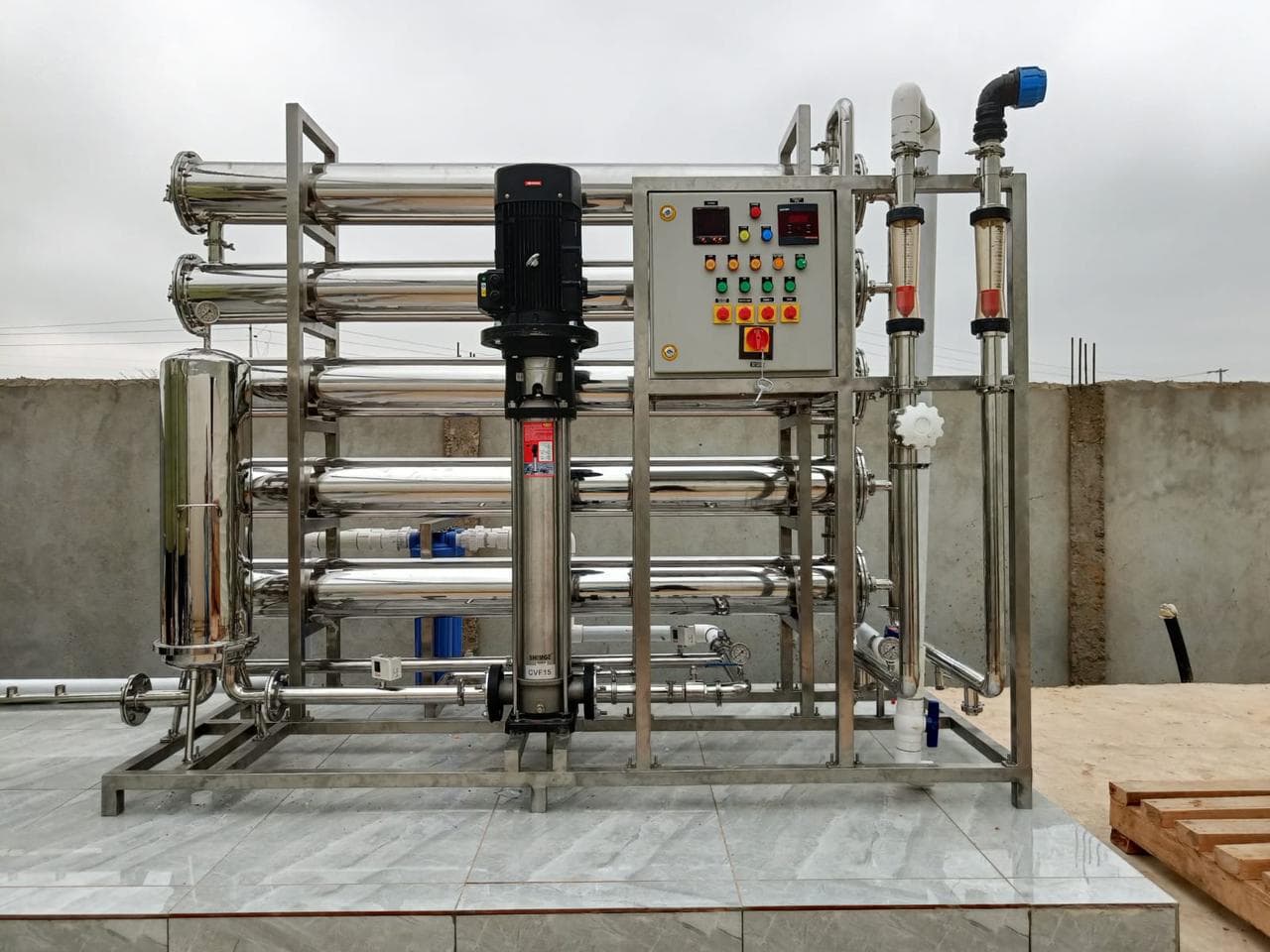
Reverse Osmosis Plant (RO)
Industrial and commercial RO plants up to 10,000+ LPH for factories, hotels, hospitals and housing societies. Built in Vasai, Mumbai since 1996.View specifications →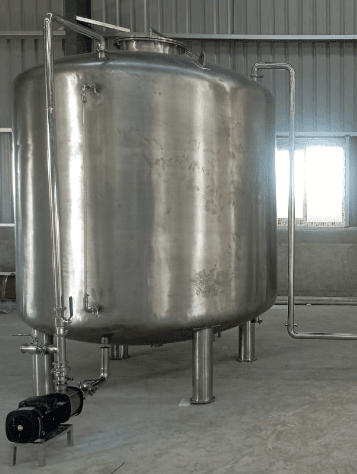
Fabricated SS & MS Vessels / Tanks
Custom stainless-steel and mild-steel storage tanks, pressure vessels and filter vessels, fabricated in-house in Vasai, Maharashtra since 1996.View specifications →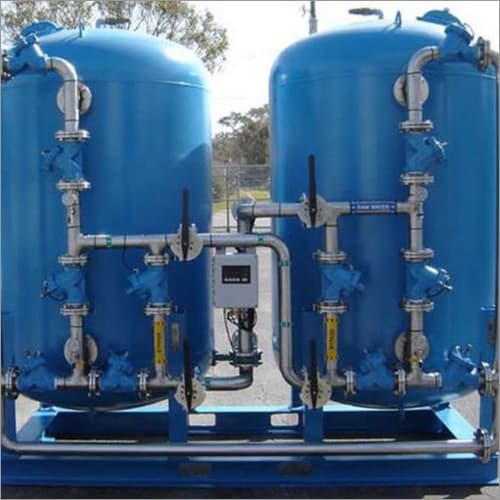
Water Softening Plant
Automatic water softening plants for boilers, cooling towers, hotels and housing societies. Removes hardness from borewell water. Made in Vasai since 1996.View specifications →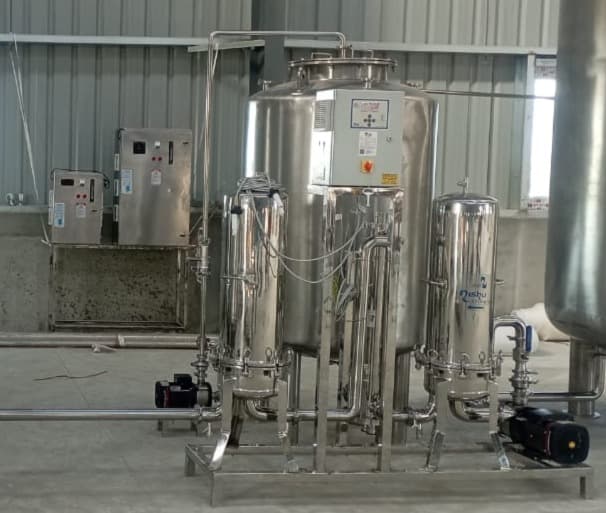
Dosing, Ozonation & UV Systems
Ozone generators for water tanks and bottling plants, UV sterilisers and chemical dosing systems for water disinfection. Manufacturer in Mumbai since 1996.View specifications →FAQ
Frequently asked questions
Can't find your answer? Call or WhatsApp us and we'll answer it.
Does water used for concrete need to be treated?
It depends entirely on the source. Indian practice sets limits on chlorides, sulphates, suspended solids, organic matter and pH for mixing and curing water. Borewell and tanker supplies frequently exceed them, so the first step is an analysis — some sources need only filtration, while saline coastal borewells need RO.
Why does chloride content matter on coastal projects?
Chlorides promote corrosion of reinforcement, which shortens the effective design life of the structure. Coastal borewells often carry significant salinity, so chloride is the first figure to check before using the source for structural concrete.
Can the plant be moved to our next project?
Yes. We build skid-mounted and containerised units specifically so they can be commissioned quickly, relocated when the project ends, and reused across several sites rather than written off with one.
How do you size a drinking water plant for a labour camp?
On headcount and shift pattern, with treated water storage sized to buffer the peaks at shift change and mealtimes. That is cheaper than oversizing the treatment capacity to meet a short daily peak.
Can you supply storage tanks along with the treatment plant?
Yes. We fabricate SS and MS storage tanks and vessels in-house, which lets the installation be built around a constrained and changing site layout.
Get a quotation
Send us your water analysis. We'll size the plant.
Tell us the source, the daily demand and what the water is for. We reply with a recommended treatment train and a quotation.