RO Plants & Water Softeners for Hotels, Resorts and Restaurants
A hotel is several water applications in one building, and they conflict. Guests notice taste and they notice scale on a shower fitting. The laundry cares about hardness because it decides detergent consumption and linen life. The kitchen cares about taste and about scale in the equipment. The boiler and the cooling plant care about something else again. The systems we build for this sector are usually segregated by duty for exactly that reason.
- Established
- 1996Established in Vasai, Mumbai
- Countries
- Plants running inNigeria · Ghana · Tanzania · Nepal & many more
- Clients
- Trusted byBisleri · Bailey · Campa · McDowell's · Mantra · Meru Spring
The challenge
What makes this sector different
Guests notice water quality directly
Scale marks on fittings, hard water in the shower and a taste in the drinking water all turn into reviews. This is the one sector where water quality is visible to the customer.
Laundry costs scale with hardness
Hard water consumes more detergent and shortens linen life. On a property doing volume laundry the difference is continuous and measurable.
Kitchen equipment scales quickly
Combi ovens, dishwashers, coffee machines and ice makers scale fast on hard water, and the service cost lands on the property, not the supplier.
No room, and no tolerance for noise
Plant rooms in hospitality are small and often close to guest areas. The system has to fit the space it is given.
Segregate by duty
The usual mistake in hospitality is a single large RO plant feeding the whole property. It is expensive to run, it treats laundry water to drinking standard for no benefit, and it makes the whole building dependent on one unit. The better arrangement in most properties is softening across the bulk supply, with RO on the duties that genuinely need it.
| Duty | Requirement | Typical route |
|---|---|---|
| Guest rooms and bathrooms | No scale, no staining on fittings | Softened supply |
| Laundry | Low hardness for detergent efficiency | Softened supply |
| Kitchen and F&B | Taste, and no scale in equipment | Softening plus RO on the drinking and equipment lines |
| Drinking water / packaged | Potable standard, consistent taste | RO with remineralisation and UV |
| Boiler and cooling | Scale control | Softening, with DM where boiler pressure requires it |
Softening the bulk supply and putting RO only where taste matters is usually both cheaper to install and substantially cheaper to run than one large RO for the whole property.
Why hardness costs more in a hotel than anywhere else
Hardness in a hotel does not show up as one large bill. It shows up as detergent consumption in the laundry, as linen replaced earlier than it should be, as descaling visits for the kitchen equipment, as element failures in water heaters, and as the housekeeping time spent on scale marks in bathrooms. Individually each is small; together they are the reason softening a hospitality property pays back quickly.
Automatic softeners with microcomputer-controlled regeneration are the normal specification here, because a property cannot rely on someone remembering to regenerate a unit manually. Regeneration is scheduled to run outside peak demand.
Drinking water and the in-house bottling option
Larger properties and resorts increasingly bottle their own drinking water rather than buying it in, which removes a recurring cost and a logistics problem, and lets the property put its own brand on the bottle. That requires the same train as a small packaged drinking water plant: RO, controlled remineralisation so the water does not taste flat, ozonation and a filling machine sized to the property's consumption.
We supply this as a complete unit, from RO to the filling machine, and for a resort running significant bottled water volume the payback is usually straightforward to calculate against current purchase cost.
Sizing around occupancy
Hospitality demand is peaky in a way industrial demand is not. Consumption concentrates around morning and evening, and occupancy varies by season. Sizing on average daily consumption produces a plant that cannot meet the morning peak; sizing on peak alone produces one that is oversized most of the year. The usual answer is a plant sized on average demand with treated water storage buffering the peak — which is cheaper than oversizing the treatment train.
What we need to quote
Number of keys, whether laundry is in-house, the kitchen and F&B outlets on the property, whether there is a boiler or cooling plant, a feed water analysis, and the space available for the plant room. If you are considering in-house bottling, tell us your current monthly bottled water purchase and we will work the comparison.
Equipment
Systems we supply for this sector
The equipment below covers most requirements in hotels & hospitality. Where the duty is unusual, we design against the specification instead.
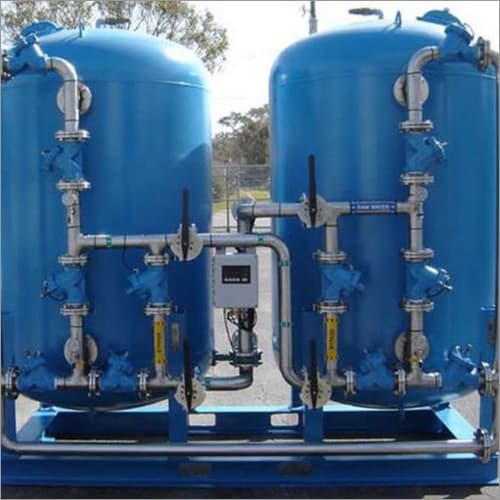
Water Softening Plant
Automatic water softening plants for boilers, cooling towers, hotels and housing societies. Removes hardness from borewell water. Made in Vasai since 1996.View specifications →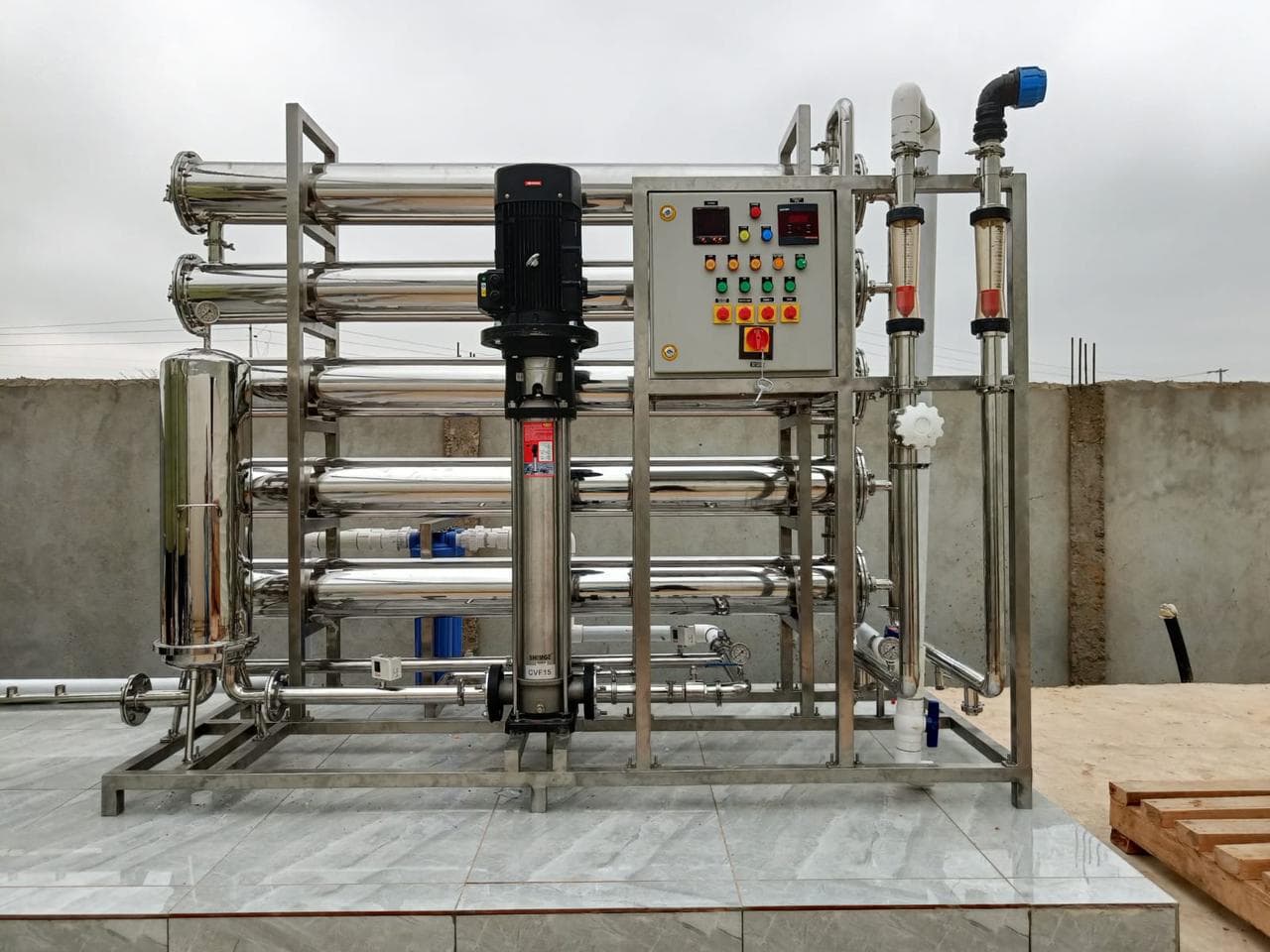
Reverse Osmosis Plant (RO)
Industrial and commercial RO plants up to 10,000+ LPH for factories, hotels, hospitals and housing societies. Built in Vasai, Mumbai since 1996.View specifications →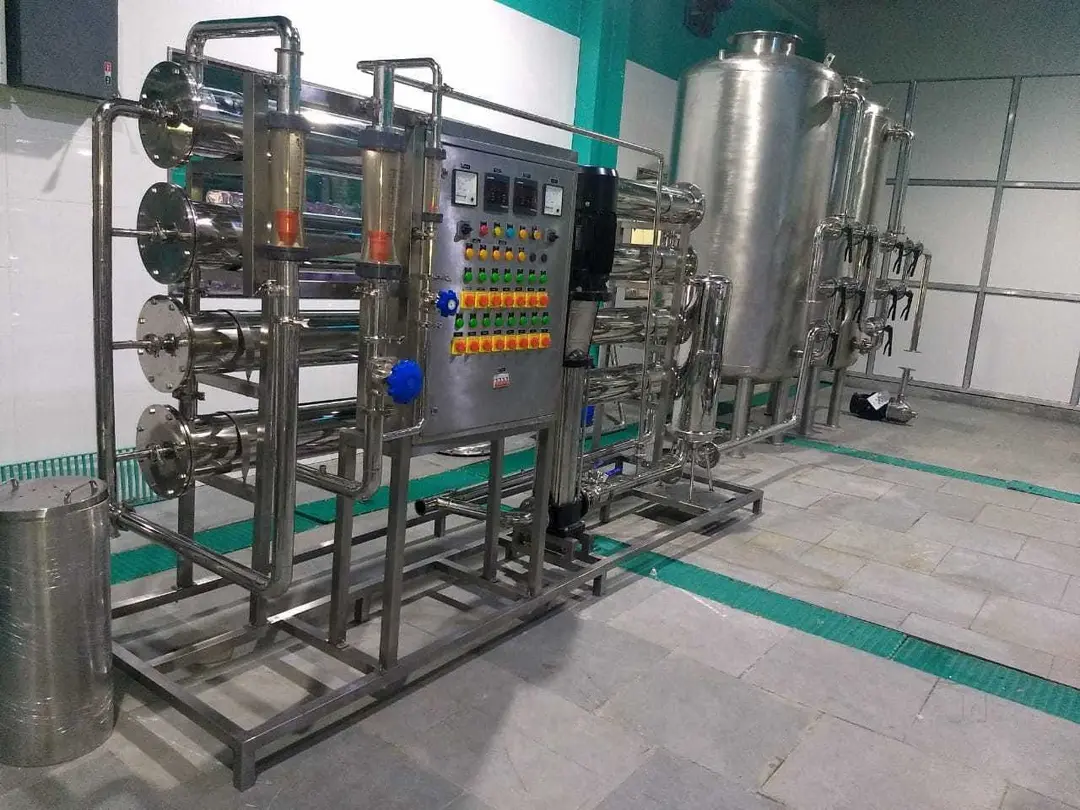
Complete Mineral Water Project
Turnkey packaged drinking water plants: RO, ozonation and bottling, built for FSSAI requirements. Trusted by Bisleri, Bailey and Campa since 1996.View specifications →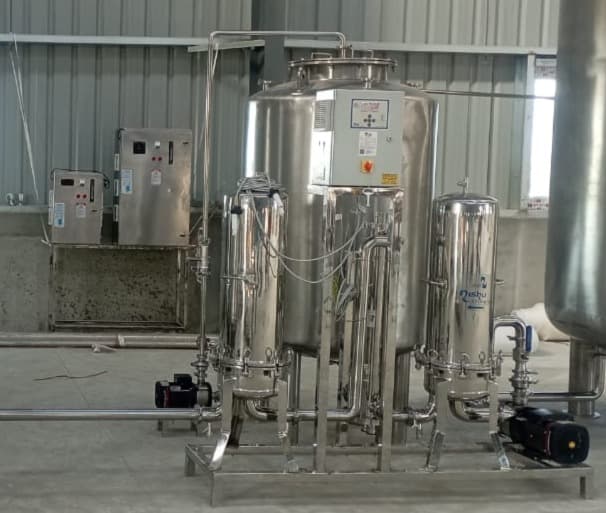
Dosing, Ozonation & UV Systems
Ozone generators for water tanks and bottling plants, UV sterilisers and chemical dosing systems for water disinfection. Manufacturer in Mumbai since 1996.View specifications →FAQ
Frequently asked questions
Can't find your answer? Call or WhatsApp us and we'll answer it.
Does a hotel need an RO plant or a water softener?
Usually both, on different duties. Softening across the bulk supply handles guest rooms, laundry and equipment protection; RO goes on the drinking water and kitchen lines where taste matters. One large RO for the whole property is normally more expensive to run without being better.
How quickly does a water softener pay back in a hotel?
It depends on feed water hardness and laundry volume, but the saving is spread across detergent consumption, linen life, kitchen equipment descaling and water heater maintenance. On a property with in-house laundry and hard feed water, payback is typically fast.
Can we bottle our own drinking water on the property?
Yes. It needs the same train as a small packaged drinking water plant — RO, remineralisation, ozonation and a rinsing-filling-capping machine sized to your consumption. We supply this as one scope, and the payback against current purchase cost is usually easy to calculate.
How is the plant sized when occupancy varies through the year?
We size the treatment train on average demand and buffer the morning and evening peaks with treated water storage. That is considerably cheaper than sizing the train for the peak and leaving it idle most of the year.
Will the plant fit a small plant room?
We fabricate vessels in-house, so the layout can be built around the space available. Send us the plant room dimensions along with the enquiry.
Get a quotation
Send us your water analysis. We'll size the plant.
Tell us the source, the daily demand and what the water is for. We reply with a recommended treatment train and a quotation.