Water Treatment for Agriculture, Hydroponics and Agro-processing
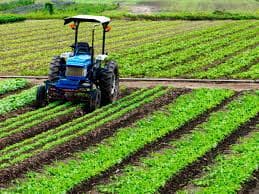
Most field irrigation does not need treated water, and we will say so. Treatment pays where the water itself limits the result: hydroponic and greenhouse crops fed on a nutrient recipe, nurseries and tissue culture, and agro-processing units such as dairies and food processors whose product touches the water. For those, the feed water has to be known, controlled and consistent, and that is an RO and softening job.
- Established
- 1996Established in Vasai, Mumbai
- Countries
- Plants running inNigeria · Ghana · Tanzania · Nepal & many more
- Clients
- Trusted byBisleri · Bailey · Campa · McDowell's · Mantra · Meru Spring
The challenge
What makes this sector different
Salinity and sodium in borewell water
High TDS and sodium stress plants and leave salts in the root zone. Hydroponic growers also cannot control a nutrient recipe if the starting water already carries a large and variable load of dissolved salts.
Hardness and bicarbonate clogging emitters
Hard water scales drip lines and foggers, and bicarbonate pushes the pH up. Both cost yield and maintenance long before anyone thinks of the water.
Seasonal variation
Borewell quality changes through the year and with the water table. A plant sized on one sample in the wet season can be wrong in summer.
Wasting water you cannot spare
RO sends a share of the feed to drain as reject. On a farm that water has a use, so the reject should be planned for, not simply thrown away.
Where treated water is worth paying for
The test is whether the water quality changes the outcome enough to cover the plant and its running cost. For bulk field irrigation it almost never does. For a polyhouse with a nutrient recipe, a nursery, or a processing line that uses water as an ingredient or for washing product, it often does.
| Use | What the water needs | Usual treatment |
|---|---|---|
| Hydroponics and greenhouse crops | Low, stable TDS so the nutrient recipe can be controlled | Sediment and carbon filtration, then RO; blending back raw water if some minerals are wanted |
| Nurseries and tissue culture | Low salinity, free of chlorine and suspended solids | Filtration and RO |
| Dairy and food processing | Potable quality for washing and as an ingredient | Filtration, softening where hardness is a problem, RO, and UV or ozone for disinfection |
| Drip and fogger lines | Low hardness and suspended solids | Filtration and softening or antiscalant, not always RO |
| Livestock and poultry drinking water | Safe, palatable, low in salts and microbes | Filtration and disinfection, with RO if the borewell is brackish |
Start with a water analysis
Get a full analysis before choosing a system: TDS, hardness, alkalinity, chloride, iron, and sodium if you can. A high-TDS borewell with modest hardness wants RO. A low-TDS but very hard source wants a softener. Iron wants removal before either. Test in the dry season as well, because that is usually the worst case.
Decide what to do with the RO reject before you buy the plant. Reject water is higher in salts but is still usable for some purposes, such as washing floors or irrigating salt-tolerant plantings, where the rules and the plants allow.
A typical train for a greenhouse or nursery
- Raw water tank and multigrade filtration to remove suspended solids.
- Iron removal where the borewell carries iron.
- Activated carbon where the source is chlorinated.
- Softener or antiscalant dosing to protect the membranes from scaling.
- Cartridge filtration ahead of the RO as final membrane protection.
- Reverse osmosis, sized for peak irrigation demand with treated water storage to buffer it.
- Dosing for pH and nutrients downstream, which the grower controls.
What we need to quote accurately
Send us the water analysis, the crop or process, the litres per day at peak, the hours you can run the plant, how much space and power you have, and whether the reject has somewhere useful to go. We size the plant to the demand and the feed water, and tell you if a simpler filter and softener will do the job.
Equipment
Systems we supply for this sector
The equipment below covers most requirements in agriculture & agro-processing. Where the duty is unusual, we design against the specification instead.
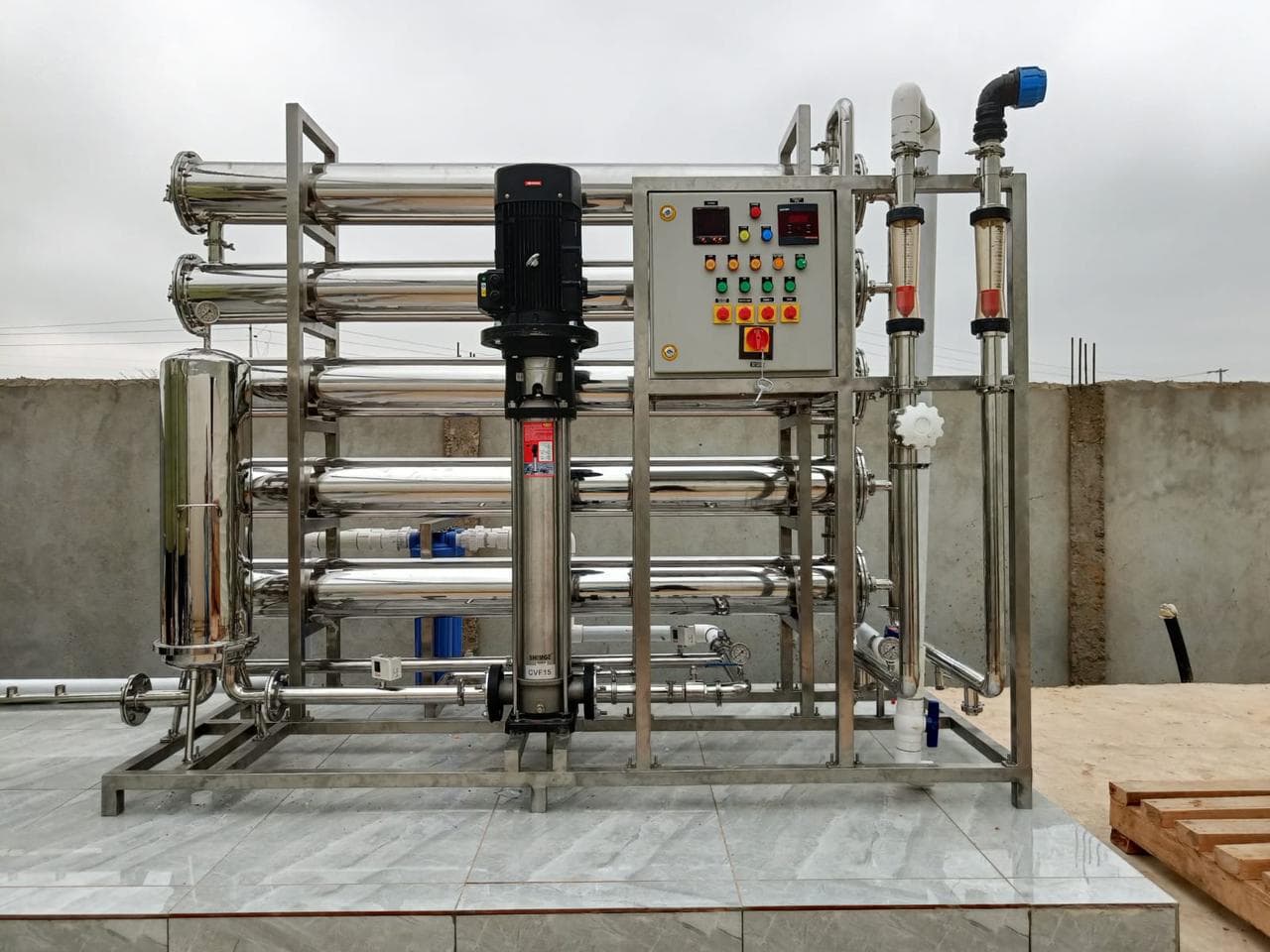
Reverse Osmosis Plant (RO)
Industrial and commercial RO plants up to 10,000+ LPH for factories, hotels, hospitals and housing societies. Built in Vasai, Mumbai since 1996.View specifications →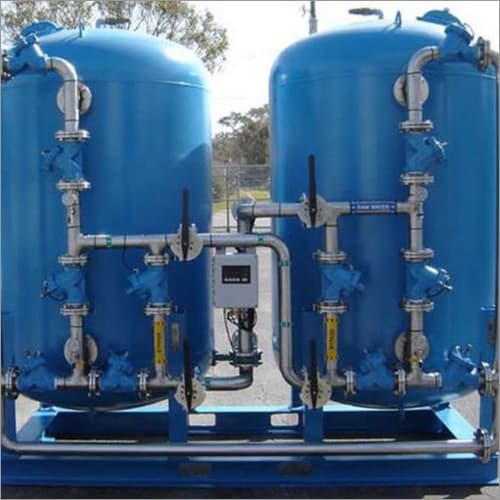
Water Softening Plant
Automatic water softening plants for boilers, cooling towers, hotels and housing societies. Removes hardness from borewell water. Made in Vasai since 1996.View specifications →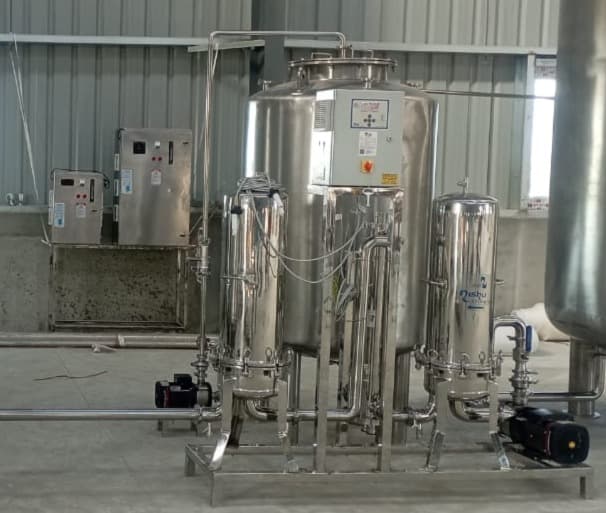
Dosing, Ozonation & UV Systems
Ozone generators for water tanks and bottling plants, UV sterilisers and chemical dosing systems for water disinfection. Manufacturer in Mumbai since 1996.View specifications →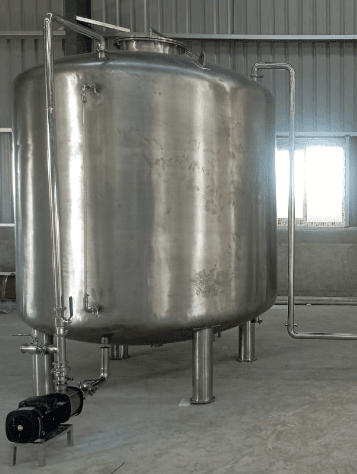
Fabricated SS & MS Vessels / Tanks
Custom stainless-steel and mild-steel storage tanks, pressure vessels and filter vessels, fabricated in-house in Vasai, Maharashtra since 1996.View specifications →FAQ
Frequently asked questions
Can't find your answer? Call or WhatsApp us and we'll answer it.
Do I need an RO plant for normal field irrigation?
Usually not. The volumes are too large for RO to make economic sense. Treatment is worth it for hydroponics, nurseries, greenhouses, livestock drinking water and agro-processing, where the water quality directly affects the result.
What TDS is suitable for hydroponics?
Growers usually start from a very low TDS so they can control the nutrient recipe themselves, and the right figure depends on the crop and the recipe your agronomist uses. We supply the RO plant and the consistent low-TDS water; the nutrient programme is the grower's call.
What can be done with the RO reject water?
It carries more salts than the feed, so it is unsuitable for sensitive crops, but it can often be used for washing, cleaning or salt-tolerant uses. Plan for it at design stage and size recovery with that in mind.
Do you treat water for dairies and food processing units?
Yes. We build filtration, softening, RO and UV or ozone disinfection trains for processing units. Processing water for food also has licensing and testing requirements, so check the FSSAI rules that apply to your product.
Can the plant run on solar power?
It can be sized to run from a suitable power source, but RO pumps draw real power, so the solar array would need sizing for that load. Tell us your power situation and we will work out what is practical.
Get a quotation
Send us your water analysis. We'll size the plant.
Tell us the source, the daily demand and what the water is for. We reply with a recommended treatment train and a quotation.