Water Treatment Plants for the Chemical Industry
In a chemical plant, water is rarely just a utility. It is a reactant, a solvent, a heat-transfer medium and a cleaning agent, and the impurities it carries can end up in the product, interfere with a reaction, or scale a heat exchanger. The right treatment depends on which of those jobs the water is doing. We have built water treatment plants for process industries since 1996, together with the fabricated vessels and tanks that go with them.
- Established
- 1996Established in Vasai, Mumbai
- Countries
- Plants running inNigeria · Ghana · Tanzania · Nepal & many more
- Clients
- Trusted byBisleri · Bailey · Campa · McDowell's · Mantra · Meru Spring
The challenge
What makes this sector different
Water becomes part of the product
Dissolved ions in process water can affect reactions, formulations and product purity. Consistency matters as much as the average.
Several duties, different specifications
Process water, boiler feed, cooling tower make-up and washing each need different treatment. One standard for all of them is either wasteful or inadequate.
Materials must suit the site
Chemical plants often have corrosive atmospheres. Vessel and piping materials have to be chosen for the site, not just the water.
Regeneration effluent needs handling
DM plant regeneration produces acidic and alkaline rinses that must be neutralised before discharge.
Match the treatment to the duty
| Duty | Usual requirement | Typical route |
|---|---|---|
| Process and formulation water | Low, consistent ionic content | RO followed by DM or mixed-bed polishing |
| Boiler feed | Hardness and silica control | Softener or DM, depending on boiler pressure |
| Cooling tower make-up | Scaling control | Softener with dosing |
| Washing and cleaning | Low hardness | Softened or RO water |
| Potable and canteen | Drinking water standard | RO with UV |
DM water for process use
Demineralised water is the usual choice where ions in the water would affect a reaction or a formulation. A two-bed DM plant removes the bulk of the dissolved ions; a mixed-bed polisher takes conductivity lower still. Where the feed water carries a high TDS load, putting RO ahead of the DM plant cuts acid and caustic consumption substantially, because the resin is then only polishing what the RO leaves behind.
A chemical plant is used to handling acids and alkalis - but DM regeneration effluent still needs neutralising before it leaves the site. Plan for it at design stage.
Materials of construction
Vessel and piping materials are chosen for the regenerant chemicals, the water and the site atmosphere: FRP vessels and UPVC piping resist corrosion well, stainless steel suits sanitary and higher-temperature duties, and suitably protected mild steel is used where size and cost call for it. We fabricate vessels and tanks in-house, so the material choice is made by the same people who design the plant.
Consumables
We supply the resins, membranes, cartridges and chemicals these plants run on - including antiscalants and cleaning chemicals - so replacement parts come from the same source as the plant.
What we need to quote
A feed water analysis, the list of water duties on the site with the flow and specification for each, boiler pressure if boiler feed is in scope, and how regeneration effluent is currently handled. Tell us about the site atmosphere and any materials your plant standards require.
Equipment
Systems we supply for this sector
The equipment below covers most requirements in chemical. Where the duty is unusual, we design against the specification instead.
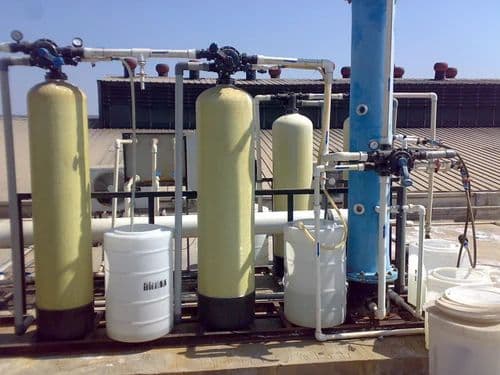
Demineralized Plant (DM)
Two-bed and mixed-bed DM water plants for boiler feed, pharmaceutical and process water. Manufactured in Vasai, Mumbai since 1996, with plants in Nigeria, Ghana, Tanzania, Nepal and many more.View specifications →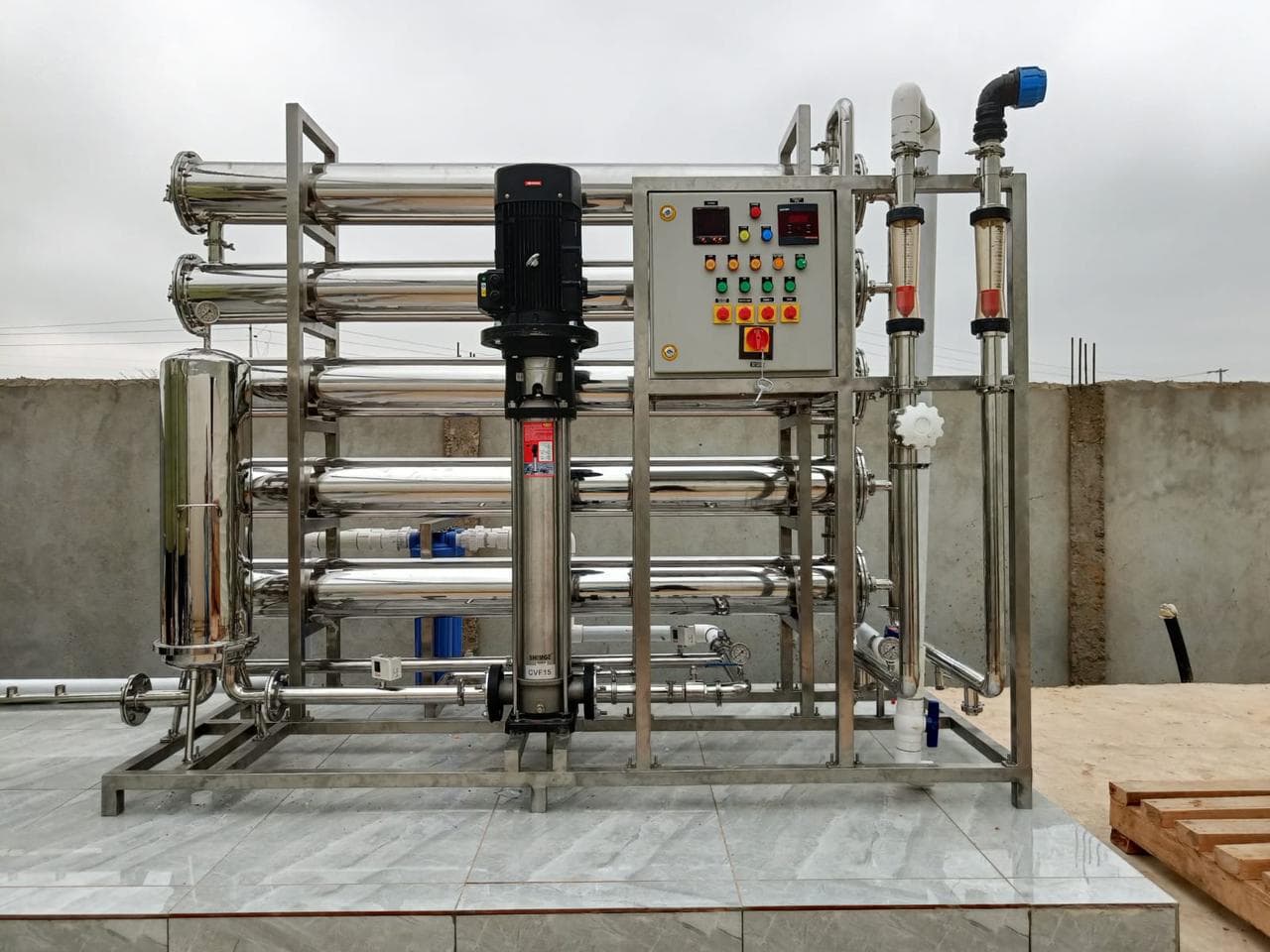
Reverse Osmosis Plant (RO)
Industrial and commercial RO plants up to 10,000+ LPH for factories, hotels, hospitals and housing societies. Built in Vasai, Mumbai since 1996.View specifications →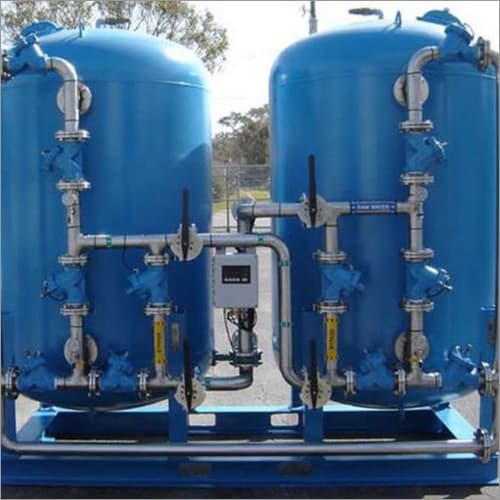
Water Softening Plant
Automatic water softening plants for boilers, cooling towers, hotels and housing societies. Removes hardness from borewell water. Made in Vasai since 1996.View specifications →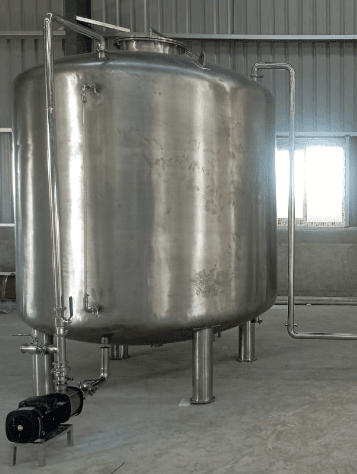
Fabricated SS & MS Vessels / Tanks
Custom stainless-steel and mild-steel storage tanks, pressure vessels and filter vessels, fabricated in-house in Vasai, Maharashtra since 1996.View specifications →FAQ
Frequently asked questions
Can't find your answer? Call or WhatsApp us and we'll answer it.
What water quality does a chemical plant need?
It depends on the duty. Process and formulation water is usually demineralised; boiler feed depends on boiler pressure; cooling tower make-up usually needs softening. We design each duty to its own specification.
Should we use RO or DM for process water?
Often both. RO removes most dissolved solids economically, and a DM or mixed-bed stage polishes the water to the conductivity the process needs. On low-TDS feed water, DM alone may be enough.
What happens to DM plant regeneration waste?
The acidic and alkaline rinses from regeneration are collected and neutralised before discharge. The neutralisation arrangement should be planned as part of the DM plant design.
Can you fabricate the tanks and vessels for our plant?
Yes. We fabricate stainless steel and mild steel vessels and storage tanks in-house in Vasai, built to the capacities and layout your site needs.
Keep exploring
Other industries we serve
Get a quotation
Send us your water analysis. We'll size the plant.
Tell us the source, the daily demand and what the water is for. We reply with a recommended treatment train and a quotation.