DM Plants & Boiler Feed Water Treatment for Power Generation
Boiler feed water is the application where water treatment economics are easiest to prove. Scale on a boiler tube is an insulating layer: it forces the firing rate up, drives fuel consumption up with it, and ends in tube failure. Demineralised feed water is not a quality upgrade in a steam plant — it is the cheapest fuel saving available.
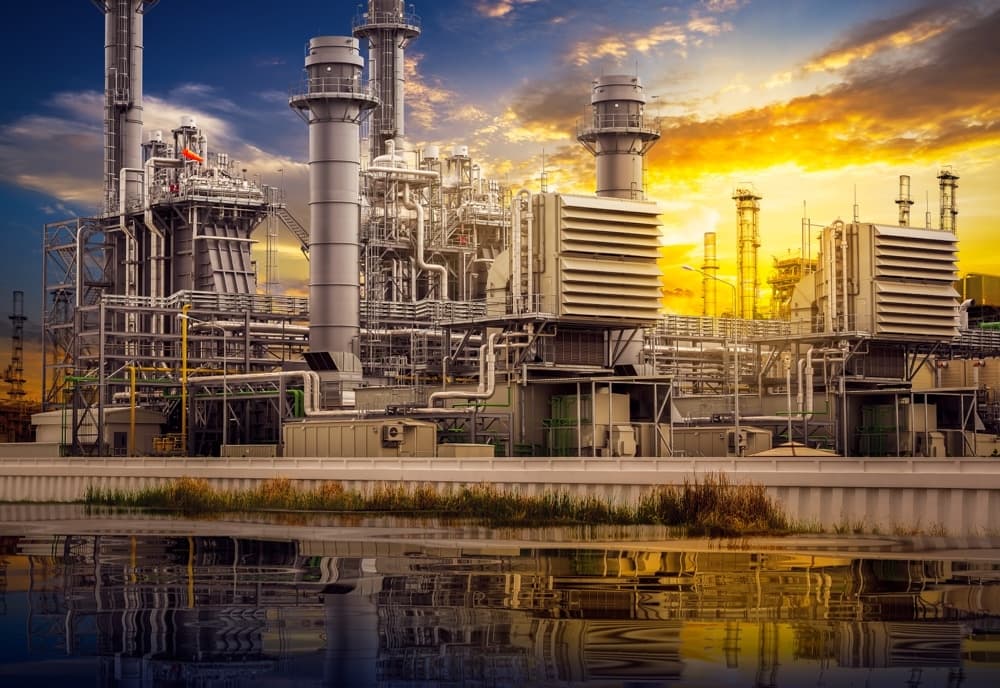
- Established
- 1996Established in Vasai, Mumbai
- Countries
- Plants running inNigeria · Ghana · Tanzania · Nepal & many more
- Clients
- Trusted byBisleri · Bailey · Campa · McDowell's · Mantra · Meru Spring
The challenge
What makes this sector different
Scale costs fuel every day
A thin scale layer on the water side measurably increases fuel consumption. The cost is continuous and it compounds until the tube fails.
Silica carries over into turbines
Silica volatilises at pressure and deposits on turbine blades where it cannot be cleaned off in service. High-pressure boilers need it removed, not reduced.
Blowdown wastes treated water and heat
Poor feed water quality forces higher blowdown rates, which throws away both the water you treated and the energy you put into it.
Corrosion from dissolved gases
Dissolved oxygen and carbon dioxide attack the boiler and condensate lines regardless of how well the dissolved solids were removed.
Softening or demineralisation?
This is the first decision and it is governed by boiler pressure. A low-pressure boiler on a reasonable feed supply may run acceptably on softened water with proper dosing and blowdown control. As pressure rises the tolerance for dissolved solids and silica falls sharply, and softening stops being enough — a softener exchanges hardness for sodium, it does not reduce total dissolved solids at all.
| Boiler operating pressure | Typical feed water route |
|---|---|
| Low pressure | Softening with dosing and blowdown control, if feed TDS is moderate |
| Medium pressure | Softening plus RO, or two-bed demineralisation |
| High pressure | Two-bed DM with mixed-bed polishing, or RO followed by mixed bed |
| Utility / turbine service | Full demineralisation with mixed-bed polishing and tight silica control |
A softener removes hardness. It does not remove dissolved solids or silica. If your boiler pressure has risen since the plant was installed, the old softener may no longer be the right answer.
How a two-bed DM plant works
A two-bed demineralisation plant passes water through a strong acid cation resin, which exchanges all cations for hydrogen ions, and then a strong base anion resin, which exchanges anions for hydroxide. The hydrogen and hydroxide combine as water, and what leaves the plant is water with the dissolved ionic load removed. A degasser between the beds strips carbon dioxide and reduces the load on the anion resin, which directly reduces regenerant consumption.
Where the specification is tighter — turbine service, or high-pressure boilers with strict silica limits — a mixed-bed unit follows as a polishing stage. Cation and anion resin in a single vessel behaves like an infinite number of two-bed stages in series, which is what takes the treated water down to the conductivity these applications need.
Running cost is a design decision
The purchase price of a DM plant is a small part of what it costs you. The operating cost is acid and caustic for regeneration, and that is set by feed water quality and by how the plant is designed and operated. Where feed TDS is high, putting RO ahead of the DM plant is often the decision that pays for itself, because the resin is then polishing a much lighter ionic load and regeneration frequency drops accordingly.
- Feed water TDS drives regenerant consumption directly — a plant sized on last year's borewell analysis will not behave the same way this year.
- A degasser reduces anion loading and regenerant use where free carbon dioxide is present.
- RO ahead of DM lowers running cost substantially on high-TDS feed, at the cost of higher capital.
- Condensate recovery is the single biggest saving available in most steam plants — recovered condensate is hot, and already demineralised.
Condensate recovery
Returned condensate is the highest quality feed water you have access to and it arrives hot, which means you recover the treatment cost and a large part of the heat input at the same time. The reason it is not always used is contamination risk: a leaking heat exchanger can put process fluid into the condensate line and straight into the boiler. Polishing the returned condensate, with conductivity monitoring and automatic dump on excursion, is what makes recovery safe.
What we need to quote
Send us a full feed water analysis including silica and alkalinity, your boiler operating pressure, steam demand, percentage of condensate returned, and whether the plant serves a turbine. Silica and alkalinity are the two figures most often left off an enquiry and the two that most affect the design.
Equipment
Systems we supply for this sector
The equipment below covers most requirements in power & boilers. Where the duty is unusual, we design against the specification instead.
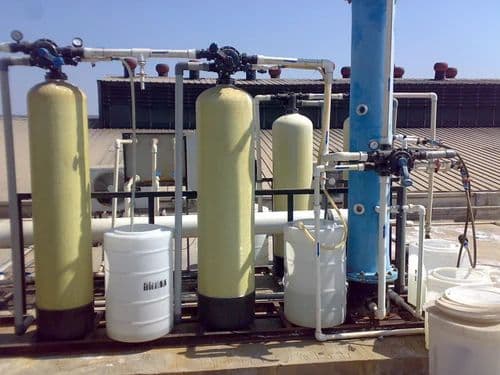
Demineralized Plant (DM)
Two-bed and mixed-bed DM water plants for boiler feed, pharmaceutical and process water. Manufactured in Vasai, Mumbai since 1996, with plants in Nigeria, Ghana, Tanzania, Nepal and many more.View specifications →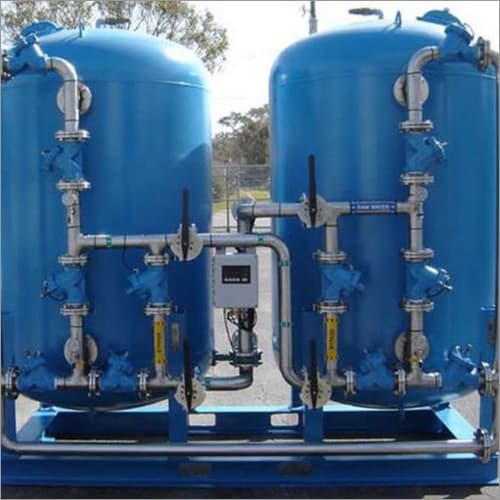
Water Softening Plant
Automatic water softening plants for boilers, cooling towers, hotels and housing societies. Removes hardness from borewell water. Made in Vasai since 1996.View specifications →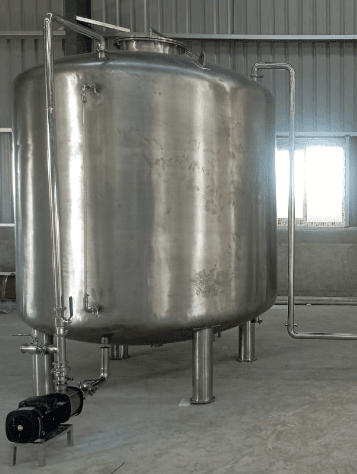
Fabricated SS & MS Vessels / Tanks
Custom stainless-steel and mild-steel storage tanks, pressure vessels and filter vessels, fabricated in-house in Vasai, Maharashtra since 1996.View specifications →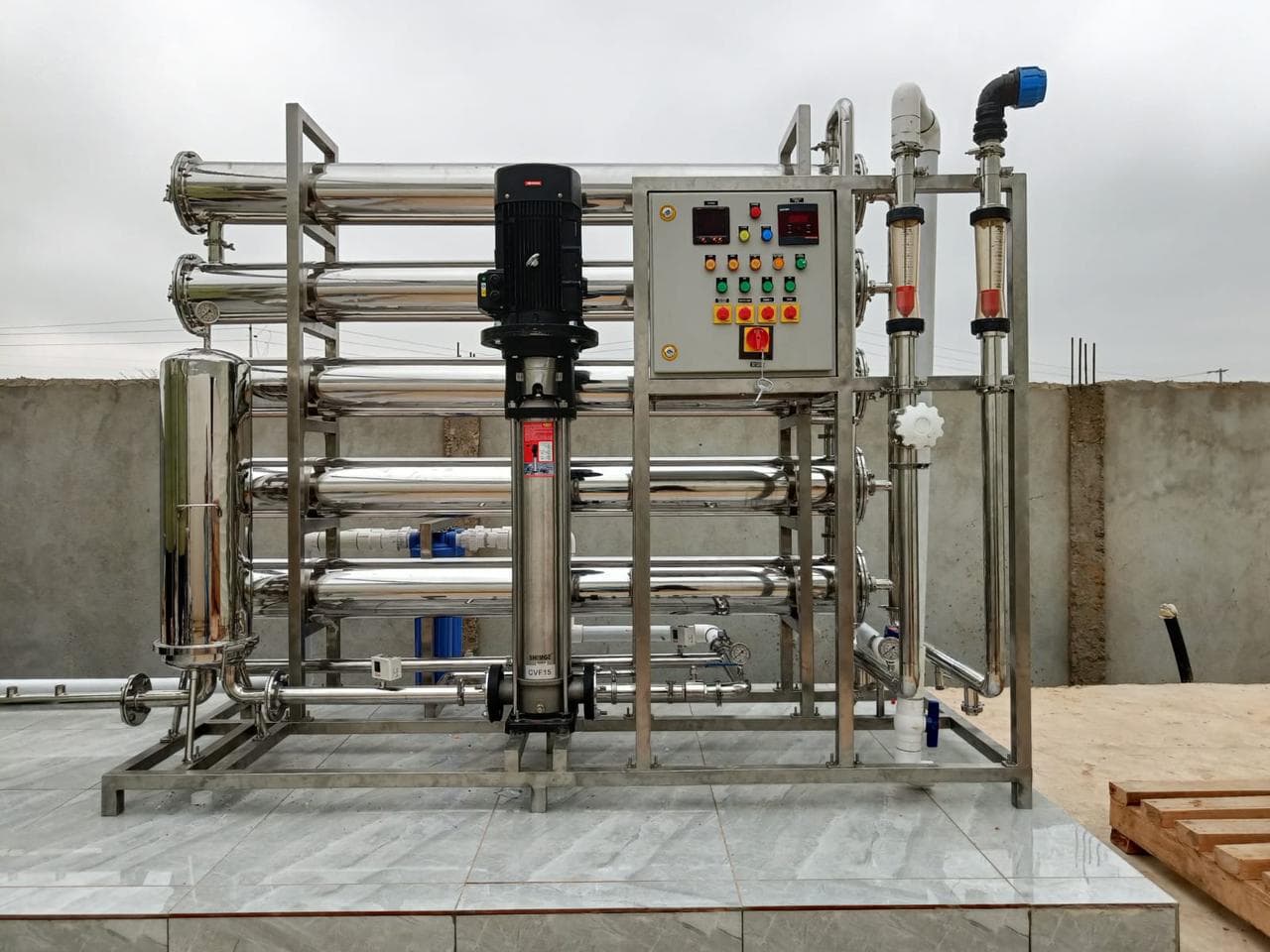
Reverse Osmosis Plant (RO)
Industrial and commercial RO plants up to 10,000+ LPH for factories, hotels, hospitals and housing societies. Built in Vasai, Mumbai since 1996.View specifications →FAQ
Frequently asked questions
Can't find your answer? Call or WhatsApp us and we'll answer it.
Do I need a softener or a DM plant for my boiler?
It depends primarily on boiler operating pressure and feed water quality. Low-pressure boilers on moderate feed can often run on softened water with dosing and blowdown control; medium and high-pressure boilers generally need demineralisation, with mixed-bed polishing where silica limits are tight.
What is the difference between a two-bed and a mixed-bed DM plant?
A two-bed plant has separate cation and anion vessels in series. A mixed-bed has both resins in one vessel, which behaves like many two-bed stages in series and produces significantly lower conductivity — it is normally used as a polishing stage after a two-bed plant or after RO.
Why does silica matter for high-pressure boilers?
Silica volatilises at high pressure and deposits on turbine blades, where it cannot be removed in service. High-pressure and turbine applications need silica removed rather than merely reduced, which is what drives the mixed-bed polishing stage.
How can I reduce the running cost of an existing DM plant?
The usual routes are adding a degasser to cut anion loading, putting RO ahead of the DM plant where feed TDS is high, and recovering condensate. We survey the existing plant and feed water before recommending which of these actually pays back on your numbers.
Do you supply the pressure vessels and tanks as well?
Yes. We fabricate SS and MS vessels, pressure vessels and storage tanks in-house, so the complete plant including vessels comes from one supplier with one set of material certificates.
Keep exploring
Other industries we serve
Get a quotation
Send us your water analysis. We'll size the plant.
Tell us the source, the daily demand and what the water is for. We reply with a recommended treatment train and a quotation.