Laboratory Water Purification Systems
Laboratory water is graded, not just 'purified'. Analytical work, reagent preparation, glassware rinsing and instrument feed each need a defined grade, and the grade decides the treatment. Most laboratories are best served by a central system distributing Type II or Type III water to the benches, with small point-of-use polishers producing ultrapure water only where an instrument needs it. We build the central system that everything else depends on.
- Established
- 1996Established in Vasai, Mumbai
- Countries
- Plants running inNigeria · Ghana · Tanzania · Nepal & many more
- Clients
- Trusted byBisleri · Bailey · Campa · McDowell's · Mantra · Meru Spring
The challenge
What makes this sector different
Grades are defined by standards
ASTM D1193 and ISO 3696 define laboratory water grades by conductivity and other limits. The system has to be designed to a grade, not to a vague idea of 'pure'.
Ultrapure water does not travel
Type I water degrades as soon as it is stored or piped any distance, so it is produced at the point of use rather than distributed.
Many outlets, one source
Benches, washers, autoclaves and instruments all draw from the same system, with different grades and flow rates.
Feed water varies
Municipal and borewell supplies change through the year. The central system has to hold its grade regardless.
Understanding laboratory water grades
ASTM D1193 and ISO 3696 both classify laboratory water, though they define their grades differently. The table below is a practical guide to how each grade is used and how it is usually produced.
| Common designation | Typical uses | How it is usually produced |
|---|---|---|
| Type I / Grade 1 (ultrapure, 18.2 MΩ·cm) | HPLC, trace analysis, sensitive instruments | Point-of-use polisher fed from a central Type II or III system |
| Type II / Grade 2 | General analytical work, reagent and buffer preparation, feed to polishers | RO followed by ion exchange (mixed-bed DM) polishing |
| Type III / Grade 3 | Glassware rinsing, autoclaves, water baths, feed to Type I units | RO, sometimes with ion exchange polishing |
Ultrapure water starts degrading the moment it is stored. Produce it at the instrument; distribute Type II or Type III.
A central system for the whole laboratory
- Pre-treatment: sand and carbon filtration, and softening or antiscalant dosing to protect the membranes.
- Micron cartridge filtration.
- RO to remove the bulk of dissolved solids, organics and particles.
- Mixed-bed ion exchange polishing where Type II water is required.
- Closed storage protected from airborne contamination.
- UV disinfection and distribution to benches, washers and point-of-use polishers.
QC laboratories in pharma and food plants
In pharmaceutical and food plants the QC laboratory often shares the site's purified water system; elsewhere it needs a dedicated, smaller system of its own. Either way, the laboratory's grade requirements should be part of the design brief from the start, not added later.
What we need to quote
The number of outlets and the grade required at each, daily volume, which instruments need Type I water and what polishers they use, a feed water analysis, and the space available for the central plant and storage.
Equipment
Systems we supply for this sector
The equipment below covers most requirements in laboratories. Where the duty is unusual, we design against the specification instead.
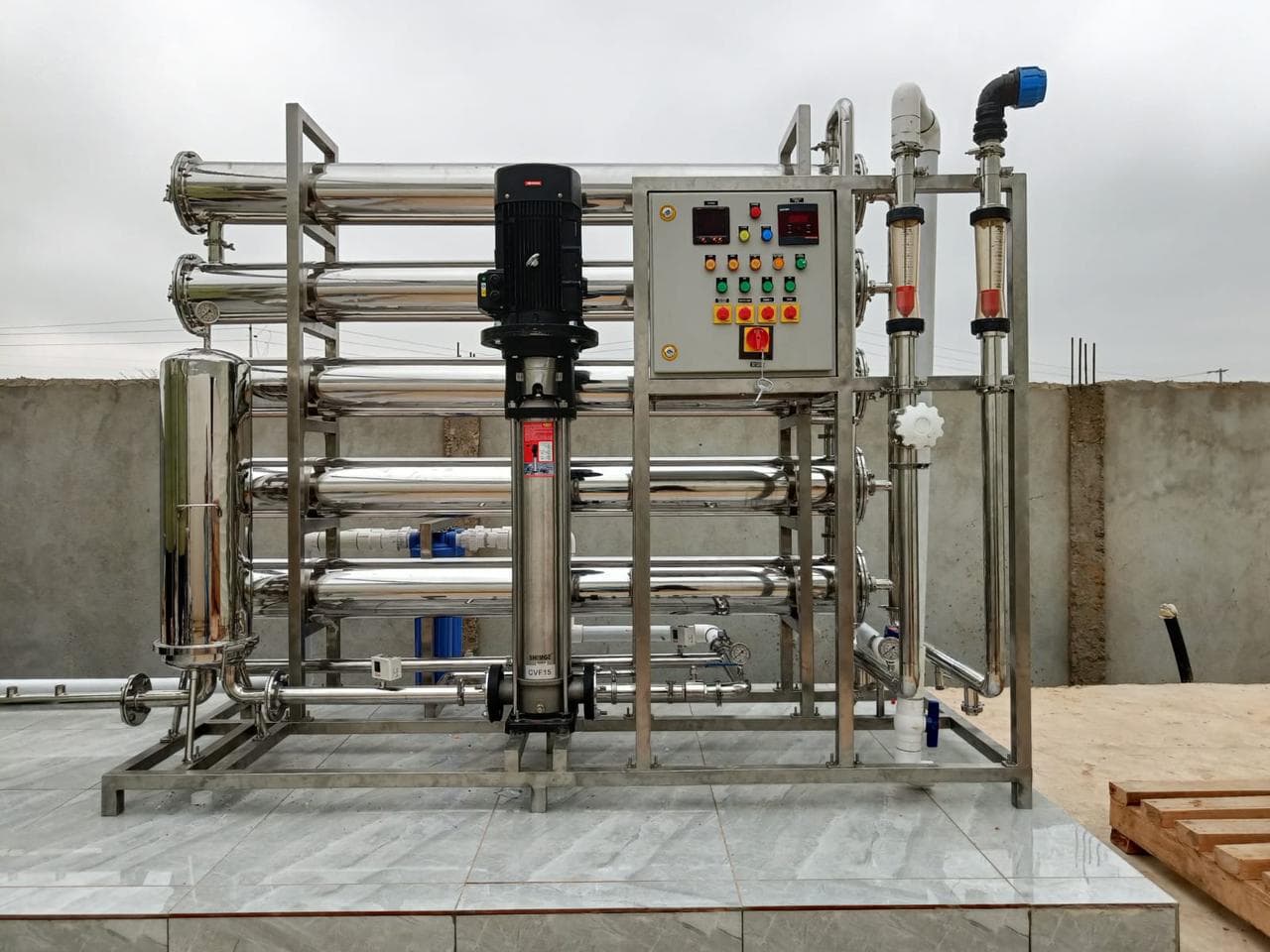
Reverse Osmosis Plant (RO)
Industrial and commercial RO plants up to 10,000+ LPH for factories, hotels, hospitals and housing societies. Built in Vasai, Mumbai since 1996.View specifications →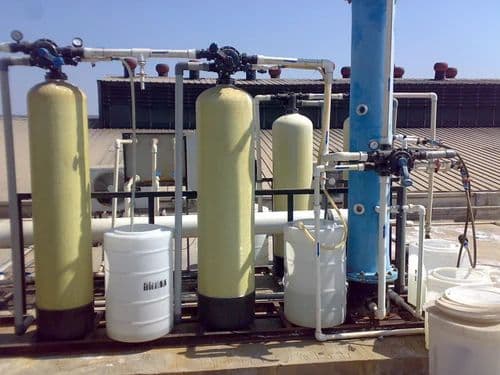
Demineralized Plant (DM)
Two-bed and mixed-bed DM water plants for boiler feed, pharmaceutical and process water. Manufactured in Vasai, Mumbai since 1996, with plants in Nigeria, Ghana, Tanzania, Nepal and many more.View specifications →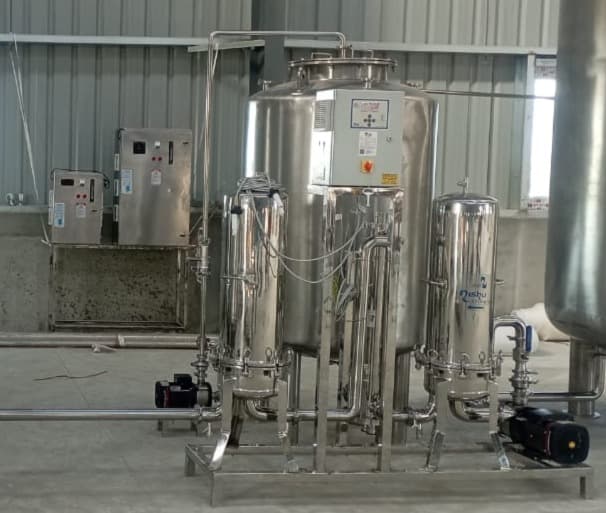
Dosing, Ozonation & UV Systems
Ozone generators for water tanks and bottling plants, UV sterilisers and chemical dosing systems for water disinfection. Manufacturer in Mumbai since 1996.View specifications →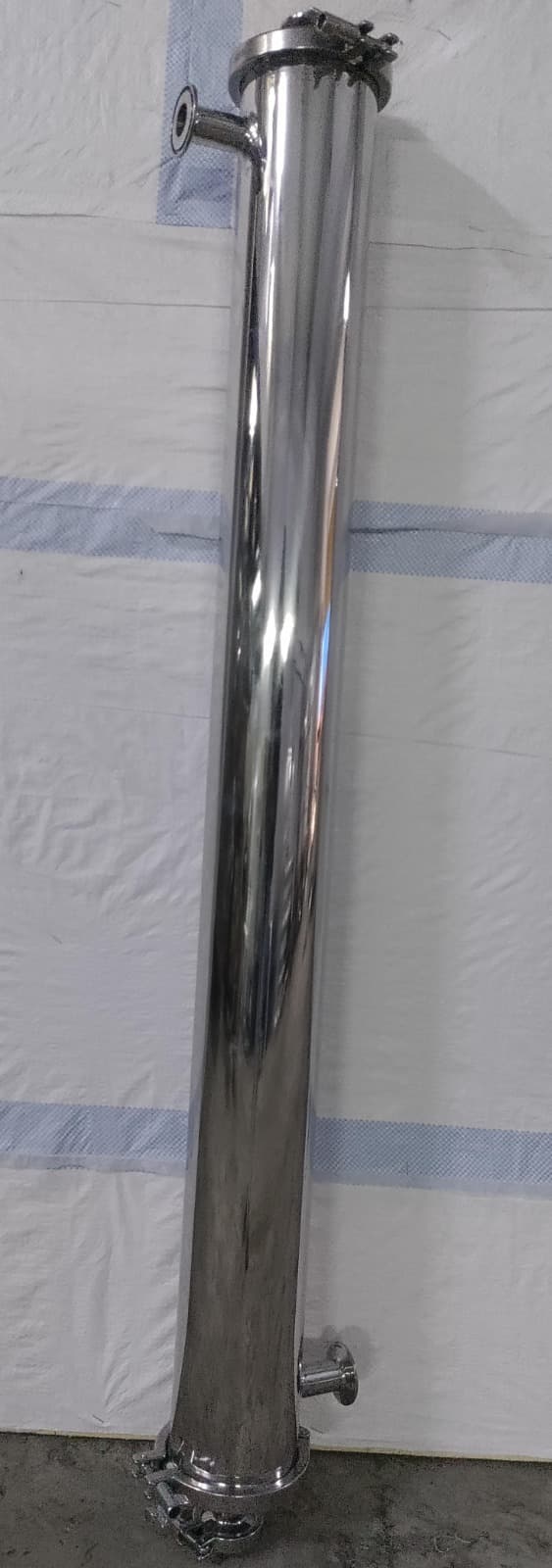
RO Spares & Consumables
RO membranes (BW, SW, UF, NF), ion exchange resins, cartridges, filter media, gauges, SS fittings and antiscalants for water treatment plants. Since 1996.View specifications →FAQ
Frequently asked questions
Can't find your answer? Call or WhatsApp us and we'll answer it.
What is Type 1 water?
Type I is ultrapure laboratory water with a resistivity of 18.2 MΩ·cm at 25 °C, used for the most sensitive analyses. Because it degrades quickly once stored, it is produced at the point of use by a polisher fed from a central Type II or Type III system.
Do you supply Type I ultrapure water systems?
We build the central RO and DM systems that produce the Type II and Type III water laboratories distribute, and that feeds point-of-use Type I polishers. If you need ultrapure water at an instrument, we design the central system around the polisher you use.
RO or DM - which does a laboratory need?
Usually both. RO removes the bulk of dissolved solids, organics and particles economically; mixed-bed ion exchange then polishes the RO water to Type II quality.
How is laboratory water quality monitored?
Conductivity or resistivity is measured continuously at the outlet of the polishing stage, supported by periodic checks of other parameters the laboratory's methods require.
Keep exploring
Other industries we serve
Get a quotation
Send us your water analysis. We'll size the plant.
Tell us the source, the daily demand and what the water is for. We reply with a recommended treatment train and a quotation.